
I read Lena Dunham’s memoir, Famesick. In her memoir, she details her experience navigating Hollywood in an industry dominated by men. In fact, in 2012, when her hit show Girls premiered, according to Variety, only 14% of women were represented in Primetime TV, both broadcast and cable. She knew this and acknowledged the privilege of having an HBO office door that read, “Lena Dunham, Writer and Director, The Untitled Lena Dunham Project.” She expresses the amount of pride and terror this gave her. “I know enough to know that every step forward would be a step for womankind, and every step back would be another excuse to resume the status quo.” Unfortunately, female directors are still dealing with this. Numbers from 2025, according to the Annenberg Inclusion Initiative, reported having dropped to a low 8%, meaning that for the Top 100 Movies of 2025, only nine women directed those 100, a sharp decrease from 2024, which was 13%, marking it a seven-year low once again.
The numbers tell part of her story that the public seemed to gloss over.
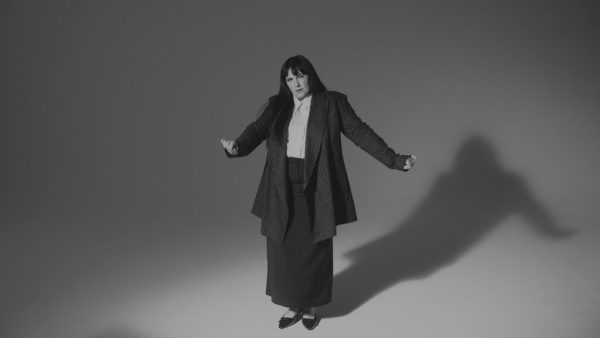
One major pressure came from the way the public fixated on her body rather than her work. After shooting the first scene for Girls, her former creative partner, Jenni Konner, is introduced. She tells her, “Everyone in LA saw the camera test–you look too pretty.” Lena describes what she can do to make herself less attractive on camera, whether that means taking off her extensions and spandex or redoing her costumes to be deemed more “messy, silly”. Jenni is adamant that the issue isn’t her looking pretty; it’s just that she’s too thin. She makes it clear that what made her special to HBO was that she wasn’t “thin”. In that moment, she felt she was supposed to be the girl that girls and men could laugh at.
This was the moment she realized that a woman she had come to know as her big sister had actually been a woman in a role, a role where she couldn’t be compromised. “Just put food in your mouth,” said Jenni. She then went into a Papa John’s and took a bite of a pizza. Jenni then met her eyes and said, “Good Girl.”
Dunham makes clear that this moment changed the way she saw Jenni Konner, from a friend to someone who would do anything to maintain their power in Hollywood.
At the same time, she suffered through one of her many waves of extreme anxiety and contacted her psychopharmacologist, and she was then prescribed Klonopin.
This alleviated her anxiety, helping her feel “alive” again, and she returned to writing.
Yet this prescription of Klonopin was one of many stresses that she would endure, which eventually led to her addiction.
In a New York Times interview I listened to, she goes into detail about how her family handled her newfound fame. During the 2012 presidential election, her father made it clear that she should go vote on her own so that he wouldn’t be seen with her.
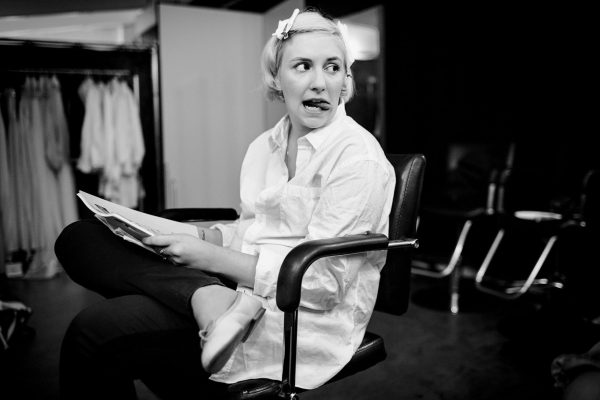 As scrutiny against her intensified, she was consumed by the need to remain in the cultural zeitgeist. She states how the intense backlash towards the show made her feel, whether it was discourse regarding female sexuality, her weight, or how the cast was “nepo-babies” before the term was even invented. She feels the weight of the show on her shoulders, and she feels as though she has to keep the sensation alive. Whether it was a slot on the Jimmy Fallon Show or a Q&A with the New York Times or an invite to the Met Gala, she felt the hunger for success, and she couldn’t stop. The more press she got, the more she put the spotlight on her life.
Eventually, she became Famesick. With the pressure and scandal looming over her life, her body began to deteriorate, and she went out of the public eye for seven years after Girls’ last season in 2017, during which she spent seven years writing her memoir.
In Famesick, her father told her during the height of her public discourse, “Don’t you get it? You’ve won. You’re only twenty-eight, and you’ve been called a racist, a fat whore, an ignorant rich girl, and a child molester. What else is left? Nothing. “You’ve won.”
Lena Dunham reveals the price women have to pay to “win” in Hollywood. Until more women win in a way that doesn’t cost them their identity, her memoir will become another reality for another woman.