
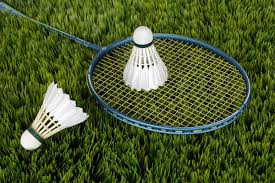
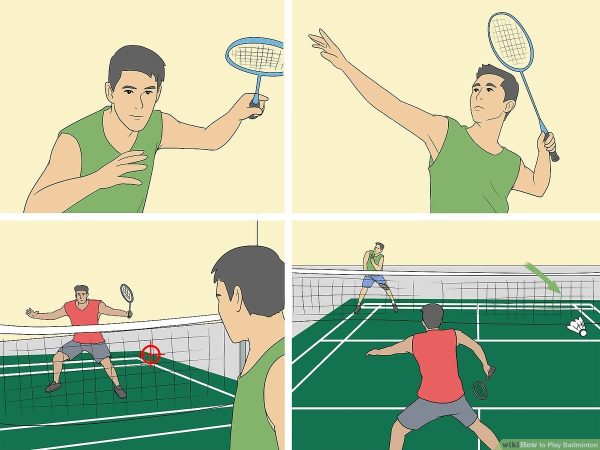
Badminton is a rather undervalued sport to many in this region when we consider it in terms of professional play or varsity-level fields. Operated on either lawn or court, it’s structured by simple rules and uses easy-to-carry, lightweight rackets. According to an instruction-based website, “Badminton can be played with two or four players [singles or doubles]. The object of the game is to score points [12, 15, 18, 21, 25] by successfully hitting the shuttlecock over the net.” Though this game often resembles the popular sport of tennis, the actual execution and play of the rounds are very different.
Badminton originated in ancient Greece, early China, and India. The game was first brought from India to England around the late 1800’s, where it was first played in Gloucestershire at the country estate of the 9th duke of Beaufort, Henry Somerset, in 1873. In more modern times, badminton is a more well-respected and popular sport in countries like China and Malaysia.
The definition of sport, according to the Cambridge Dictionary, is a game, competition, or activity that requires physical effort and skill, played or done according to set rules, for enjoyment and/or as a job. Badminton itself meets every box and requirement to be legally and publicly recognized as a sport. Yet people still view it oppositely. Tang, a formerly highly ranked badminton player, quoted, “It’s really popular in the rest of the world, but specifically Asia, probably because it originated there. It’s like our version of soccer, basketball, football…When I grew up, I was talking to white girls at my school, and they were literally like, ‘Badminton’s not a sport.’ And at the time I was ranked [number] two in the United States.”
Obviously, we can assume that, by checking all the requirements to be a sport, badminton is an active one. So why is it so underestimated? The main reason for the under-appreciation of this racket and ball activity is the lack of professional athletes and Olympic success in the United States. Combined with easier-to-master sports like Pickle Ball, badminton’s popularity did not surge overnight as it did in most Asian countries. Publicly, people automatically assume that this sport is easy because of the minimal actual competitiveness on the real athletic stage. To top it off, badminton has this classic stereotype of where it’s viewed as a “backyard sport”, something you’d play for an easy, fast, and light-hearted time with your friends and family at the park for a picnic. Although this is not necessarily misconduct, diminishing its value is. Many Americans look down on badminton or even express disrespect for it, completely ignoring the mental and physical burden it entails.
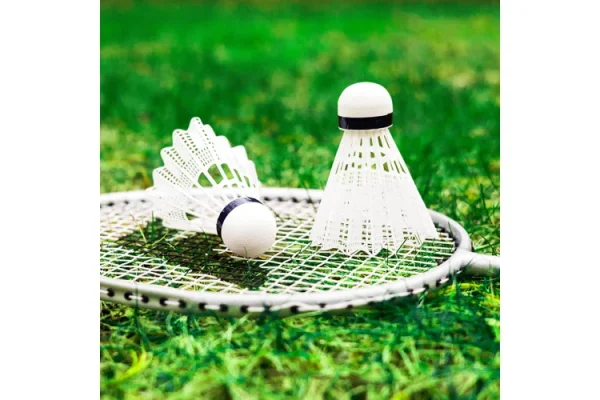
Badminton places immense emphasis on maintaining split-second focus during high-speed rallies, overcoming acute mental fatigue, managing intense performance anxiety, and rapidly adapting to an opponent’s tactical deception. On the court, you can never stop moving, even for a second, because by pausing, you’ve already mentally given up. The attention you need for this sport compared to activities like basketball or volleyball is very different. Badminton shuttles are small, their white color easily blending into the background, and, racing at high velocity, they require sharp eyes always pinned to the object itself. But badminton isn’t only about mental skills; it’s also about physical skills. Badminton is often considered the fastest racket-to-ball sport. Rounds last up to an hour of never-ending physical labor of running, jumping, and sprinting all over the court. Aside from endurance, stamina, and speed, you also need to be able to use your strength effectively in different situations. Too much or too little force can ruin your chances of winning. But this isn’t even the finish line for what you need to play badminton. Like other sports, badminton has a strict set of rules, some of which involve you having to land your serve at a certain area, or how you’re not allowed to even graze the net when playing, and much more. This is only about the game itself, but, as sports often do, it requires hours of practice, conditioning, and endless hard work acting as preparation.
Since in almost every aspect, badminton is as challenging as other sports, shouldn’t it deserve more recognition and respect? Understanding that the lack of success and professional play do knock its popularity down, the sport itself is not “easy” and should not be dismissed as casual or its efforts underestimated.