
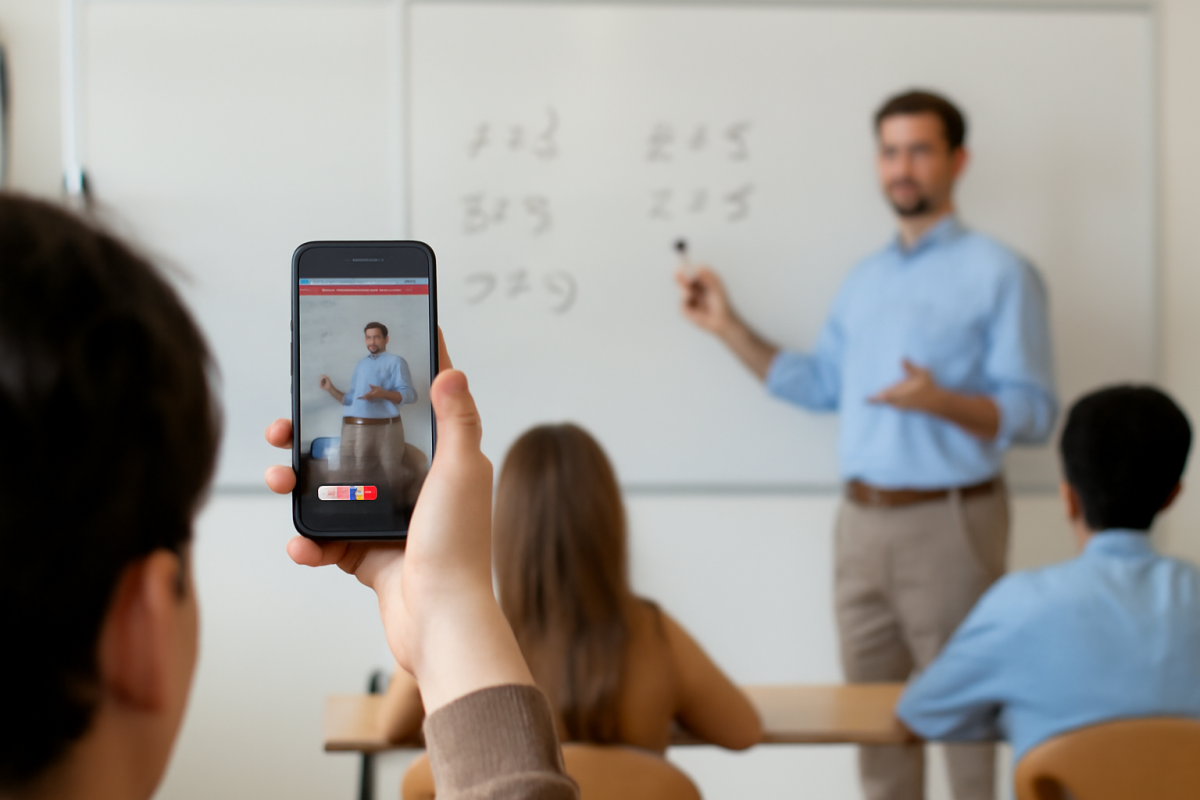
As schools across the country move to restrict cellphone use, a new question is emerging: if students lose access to their devices, do they also lose a powerful tool for holding teachers accountable? Lately, schools around the world have been dealing with issues related to students and their cellphones, with states in the U.S. going as far as to ban their use inside schools. However, is this fair to students when phones can also serve as a means of holding their teachers accountable? The matter is further complicated by state privacy recording laws, such as California’s Penal Code § 632, which prohibits recording any conversation without the prior consent of all parties in any nonpublic space. Essentially, this means that you cannot record any private conversation unless the party before you is aware and consents to being recorded, or unless it takes place in a public forum or event. This has led to further debate on the topic of whether or not a classroom counts as a public or private zone, such as in a 2010 article, “Video Surveillance: The Right To Privacy & Safe Schools”, from Benard James, a professor of Constitutional Law, that covered issues of privacy in regards to cameras and listening devices being installed by school districts, and stated this on the matter: “Therefore, in public places, the validity of the use of VST is a moot issue. School officials may observe and record what they lawfully can see with the naked eye. Activities occurring in parking lots, hallways, classrooms, auditoriums, and the open areas of bathrooms do not involve reasonable expectations of privacy.” Naturally, the question arises: if certain school districts view schools as public forums where privacy isn’t to be expected, why do schools prohibit students from exercising their rights?
Perspectives of Schools

According to Santiago’s school district, CNUSD, their own policy on recording is that, “No recording of any kind is permitted in a classroom without the express permission of the teacher” and that recording is not allowed in “bathrooms, locker rooms, nurse’s offices, administrator’s offices” areas that there is an existing, “expectation of privacy.” CNUSD claims that in private areas of the school, there is an expectation of privacy and therefore recording isn’t permitted. The complication is that a classroom is considered secluded relative to the public. Nurses’ offices, locker rooms, and bathrooms all have reasonable explanations for why they would be regarded as private. These spaces either contain confidential information or address general privacy concerns for staff and students. However, classrooms lack a comparable rationale for their classification as private spaces. Classrooms are where students are consistently present and where information is shared; they should be appropriate and adhere to the district’s rules and policies. Why do classrooms specifically require protection for the content taught in these classes?
A valid concern of school administrations is that out-of-context discussions or conversations may be recorded and posted online, potentially harming people’s reputations publicly. At the same time, teachers should teach in accordance with school policies and do not require privacy protection if they are upholding the district’s curriculum and policies. Treating classrooms as private spaces deprives students of a tool that could help hold teachers accountable, deprives them of evidence of teacher behavior, and makes it more difficult to substantiate reports to administrators.
Another argument made by school administrators is that allowing phones on campuses detracts from students’ focus and mental well-being, and that their removal improves academic performance. While these statistics are certainly a factor to consider, the safety concerns are also something that school administrations must take seriously and at least feel compelled to address to improve this matter for students.
The Campbell Executive

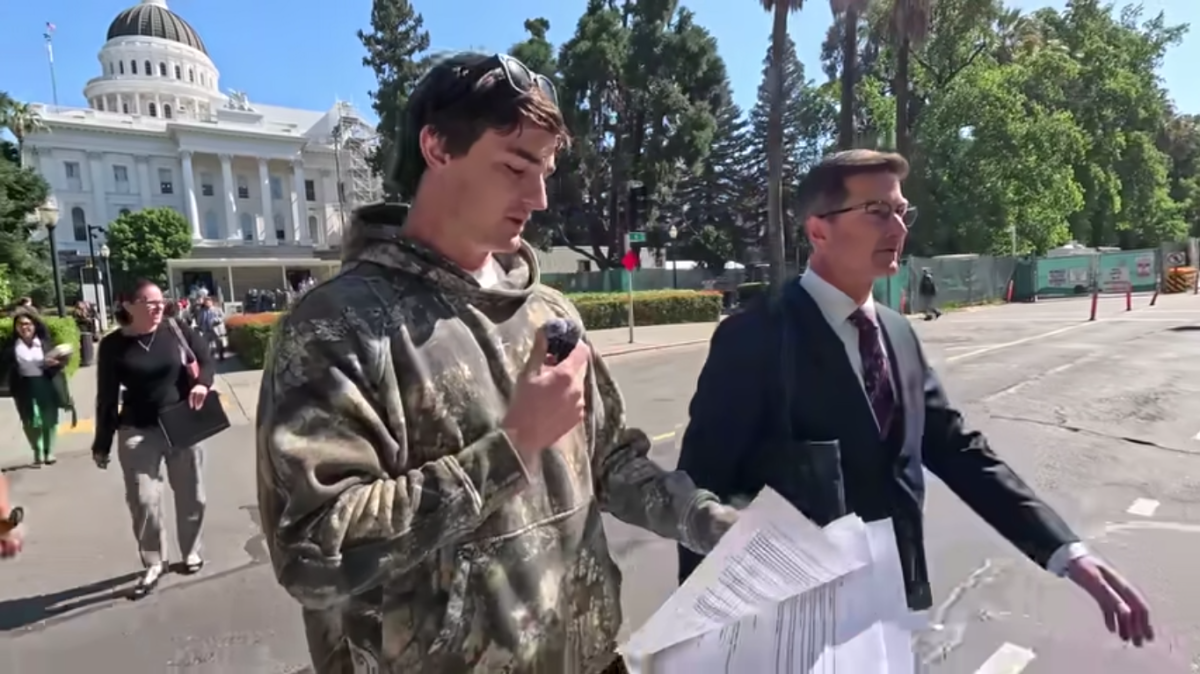
Interestingly, news reports from a few weeks ago covered this issue when discussing the racist and insensitive remarks made by a Campbell Executive. The key point of this story is that the audio of the executive’s rant was captured only because an employee recorded it. Notably, the employee, Robert Garza, was allegedly fired after reporting the incident. If Garza had never recorded the audio and publicly released it in court, the executive could have remained at Campbell and continued this behavior, underscoring the importance of the ability to record in this manner. Although this occurred in a workplace rather than a school, a teacher should also be held accountable at their place of work. Without students being able to record their teachers, it becomes more challenging to accomplish and to verify any claims made by students. Imagine if Garza weren’t able to record the executive; it would be doubtful that anything would come of mere accusations, compared with now, when he will be held accountable. Similarly, a student would struggle to prove any cases against their teachers if they lacked evidence.
What do members of Santiago think?

Some students share a similar perspective, such as Colin Rivera, a senior at Santiago High School, who, when asked about the policy, stated: “I don’t think there should be an expectation of privacy when you’re in a room with over 30 children.” This sentiment expresses a general agreement that treating classrooms as private is inconsistent with the definition of these protected private sections of schools. “I do think they (teachers) should be allowed to be recorded.” As a student myself, I had a former teacher who once began our school year by saying something along the lines, to the entire class, of not complaining about them to the administration because they were doing everything required of them, so that nothing would change, and we would get off on the wrong foot. As one might expect, the rest of the school year was not a positive experience for many other students with this teacher, and had I recorded this teacher, I might well have presented it to the administration.
However, this policy affects teachers as well, and from a teacher’s perspective, Mrs. Laura Larson commented that she was “Genuinely conflicted.” Since Mrs. Larson agreed that, “Students deserve tools to hold teachers accountable when something inappropriate happens. Evidence matters.” Further, she added that she: “…never want[s] a student to feel powerless if they’ve been mistreated,” but calls out the ramifications and potential consequences of cell phone usage being abused by students at schools. “I’ve also seen serious harm… come from unrestricted recording on campus.” This highlights the importance and complication behind implementing and managing such policies, as Mrs. Larson continues by explaining that, “Phones… often [are also] used to record other students without consent. [In] …situations involving bullying, hazing, and even sexual exploitation.” As Mrs. Larson also points out, these situations were also actively made worse because somebody: “… could film and share moments that never should have been posted. The impact on students in those situations can be devastating.” A problem that deepens the complexity of altering such policies on campuses and that would have to be considered by administrations if any changes were to be made. Mrs Larson finishes with her main opinion and final thoughts on the matter by reinforcing that she believes that improved systems of accountability are needed in schools: “…where students can report concerns safely, be taken seriously, and have administrators investigate thoroughly. I’m completely supportive of finding responsible, structured ways for students to feel protected without opening the door to more harm among students.” Overall, Mrs. Larson discussed valid concerns about the harms associated with cell phone use on campuses and the delicate balance necessary to achieve an effective system of accountability and protection.
What should students do?
Unfortunately, the complexity of this policy makes it difficult for school districts to revise it, particularly when they have already made efforts to ban phones from their schools and when states like California have two-way recording consent laws. However, in the future, there may be a compromise, perhaps allowing students to record a teacher only if they intend to report it to the proper authorities and not to publish it online. Or a Mrs. Larson mentioned a system implemented that allows students to be taken seriously and ensures that matters are properly investigated to protect students better. Regardless, this policy should be reconsidered in the modern era to better protect students and hold teachers accountable. Students should keep this topic in mind, discuss it with their school administration, and, if appropriate, contact their school districts to request that they consider improving teacher accountability and ways for students to protect themselves. Additionally, students should use this as a reminder to consider their rights as they begin to be integrated into workplaces and their future lives, and to assert themselves, rather than allowing corporations or other organizations to deprive them of rights that could protect them. Students deserve to have their safety taken seriously and protected at their schools, with policies that reflect this commitment.




Ariel Hernandez • Dec 17, 2025 at 12:19 pm
This is an awesome topic and very well written!
anonymous • Dec 17, 2025 at 8:34 am
amazing