Ant-Homes Get Hijacked
Imagine waking up to find your home taken over and your authority stripped away. This is the reality for thousands of ant colonies each year.
While insects are primarily known for their resourceful yet intrusive survival tactics, parasitic queen ants have taken it to a new level. Queen ants around the world often find themselves in unlucky predicaments when intrusive queens come in unexpectedly and steal away their colony through the use of chemical warfare.
This unusual phenomenon is occurring worldwide, but is most often occurring in Japan and Europe. Multiple observational studies in Japan have documented striking findings about the behavior of various ant species.
Fascinations With Insect Warfare
Taku Shimada, a long-time ant enthusiast page owner of “AntRoom”, and friend of the assistant professor Keizo Takasuka of Kyushu University’s Faculty of Science in Japan, had posted his discoveries of colony infiltration in 2021. Takasuka announced, “I found the post three years later and was so astonished. I thought it was a very valuable discovery that deserved to be documented as academic knowledge.”
Takasuka conducted similar experiments through his online discoveries who, quite fascinated with social parasitism, where stated on the Kyushu University Vision 2030; “My own research focuses on how parasitoid wasps manipulate the behavior of spiders. In the natural world, parasitic organisms utilize many interesting strategies to infect their hosts,” and “I am investigating these different host killing strategies to understand the evolutionary pressures that drive them.”
The Ruthless Route
Furthermore, many queen ants invest considerable effort in establishing their own colonies. However, others take a very different approach to achieving their naturalistic goals.
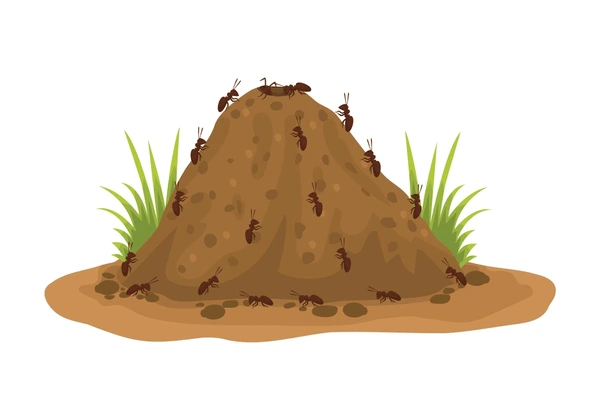 It starts when the intruding ant sneaks in, in search of the queen who belongs to that colony. The intruder bombards them with an abdominal acid that masks the queen’s natural scent and makes her appear as an enemy to the rest of the colony, becoming practically unrecognizable to her children.
Relentless ant behavior like this was documented by Yuki Tanaka, the study’s secondary author, in the Current Biology Cell Press Journal, who found that two different species of parasitic ants had invaded each other’s nests in his experiment: Lasius flavus and Lasius Umbratus.
For reproduction and offspring survival, the intruder queen makes their colony her new home. Meanwhile, the original queen becomes irrelevant to the colony, with Takasuka reporting that the colony had “begun attacking their queen” as a result of the disturbing scent surrounding her, leading to a fatal outcome.
Chemical Consequences
The complexity of chemical warfare within insect life is greater than many may realize. Intrusive queen ants don’t just break in at the beginning and steal the original queens’ life; they instead, through the strategic use of chemical signals, actively manipulate the worker ants into working for her, and taking care of her eggs, whilst the other queen is no longer protected.
Mean Queens Are Misunderstood?
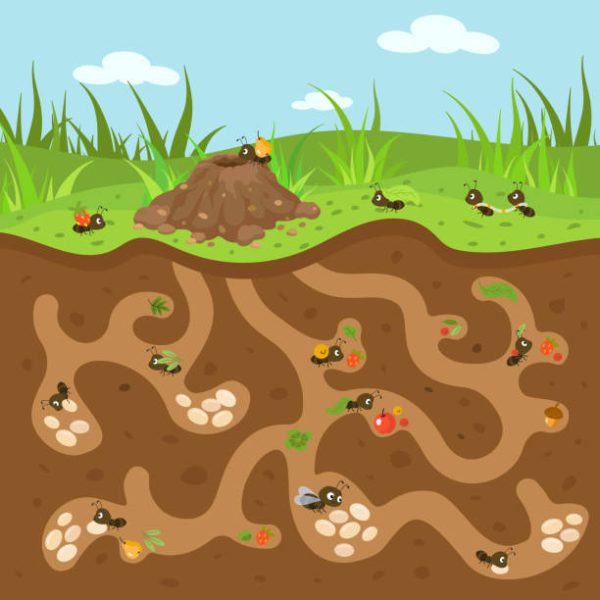
While it mainly sounds more natural for queen ants to go through the time-consuming troubles of making their own colony, it does not mean that the queen ants who hijack already-standing colonies are doing it because they are antagonists. Instead, it’s another survival tactic with greater advantages, especially for reproduction.
The Connections
Parasitic ant queens demonstrate the lengths that often must be reached for efficient survival as an insect in the wild. The complexities of the plans insects make to survive are already quite wild. Still, queen ants take it to the extreme, ensuring the success of their reproduction even if violence must be involved in the process.
The chemical manipulation that occurs inside insect homes relates to the psychological signals people receive in high school, such as peer pressure, social cues, trends, and, overall, the desire to fit in. These reckless decisions that parasitic ant queens make to survive are analogous to the sacrifices students make to fit in and lead fulfilling social lives.
Ultimately, the appalling lives of insects are not far off from the hardships and the ever-changing identities that high school students face.