Should the US rewild substantial amounts of land? Well, when looking at the question, you might automatically assume that the course of action of rewilding is the morally and environmentally good option. However, they both have their benefits and challenges.
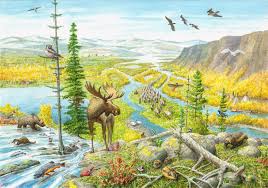
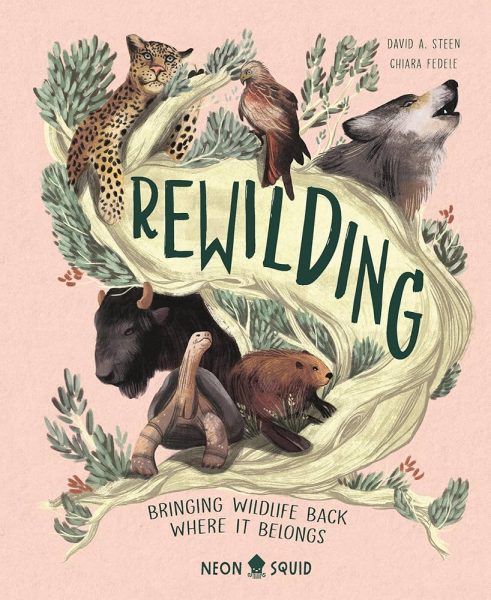
Rewilding refers to the restoration of ecosystems by reintroducing near-extinction species, planting more vegetation, and reducing human interference in those areas.
Rewilding restores biodiversity and fights climate change. In a report in NatureServe: Over One Third of Biodiversity in the United States is at risk of disappearing, recently updated just earlier this year, “34% of plants and 40% of animals are at risk of extinction, and 41% of ecosystems are at risk of range-wide collapse.
Reintroducing key species such as wolves, sea otters, beavers, and bison (all discussed in NRCD; Keystone Species 101) helps restore ecological balance. These restored ecosystems are stronger and more resilient, benefiting both people and nature for future generations. On top of the benefits, Rewilding complements renewable energy; it naturally sequesters carbon through forest growth, soil restoration, and trophic balance. According to an article by GRRLScientist, rewilded ecosystems can emit an “additional 6.41 billion tons of CO2 every year (6.41GtCO2-eq/yr).”
And on cost, rewilding is an investment, not an expense. Once restored, ecosystems become self-regulating, reducing long-term costs on disaster recovery, healthcare, and agriculture. Considering that the U.S. spends over $20 billion annually subsidizing fossil fuels, reallocating even a fraction of these funds could fully fund rewilding programs.
In addition to the benefits for biodiversity and climate change, rewilding also helps create jobs. In America, as of August 2025, there are more than 7.4 million unemployed adults (The Employment Situation – August 2025).
For unemployment, there are three types of causes: Frictional Unemployment: temporary joblessness as workers search for better-paying positions. Then we have Structural Unemployment, which occurs when people can’t find jobs because their skills don’t match employers’ requirements. It’s often caused by new technology or economic changes.
Another type is Cyclical Unemployment: job loss caused by economic cycles. Another reason behind unemployment can often be the unjust treatment of minorities and racist employers.
Rewilding can offer jobs such as Assistant Keeper, Captive Breeding Assistant, Veterinarian, and Species-at-risk Technician. Communications Officer/Specialist, Marketing Officer, Social Media Assistant, Editor, Writer, Blogger. Which isn’t even nearly half of the available careers just for beginners. (by Conversation Careers)
Some of these are special skills that can be learned in a short period of time through programs. But overall, they all provide an “equal opportunity employer that values diversity in all forms and is committed to an inclusive, respectful environment for all. It is our policy to ensure that all individuals are treated equally without regard to race, color, national origin or ancestry, religion or creed, sex.” (Re-Wild: Careers)
This offers a wide range of options, some with minimal requirements and freedom to choose what you enjoy doing, making both money and making our country a better place at the same time, since Rewilding creates entire local economies, from ecotourism to research and education, and supports skills beyond just science, including maintenance, construction, and communication.
Rewilding also focuses on marginal or degraded land rather than prime farmland. If it does not cause harm to anyone, it supports rural recovery by transforming abandoned or low-yield areas into sustainable assets. Moreover, rewilding and clean energy aren’t rivals — many regions already integrate solar or wind farms with restored ecosystems, maximizing land use while preserving biodiversity.
Lastly, rewilding is often regarded as a moral obligation. Humans caused much of today’s environmental destruction; we are the reason nature is in the state it is in, and if we can repair it, we are morally obligated to act. Refusing to rewild when we can prevent harm violates utilitarian ethics because it results in greater overall suffering and fewer overall benefits. Protect it for future generations. For people who live after us.
But, rewilding also has its downsides: It’s a bit idealistic and not practical. Rewilding would entail an impractical and inequitable redistribution of land, undermining human stability. Rewilding requires substantial tracts of land to make a meaningful ecological difference in our country. These tracts often include farmland, rural housing areas, or publicly owned lands that currently support human communities or food production. As the U.S. population grows, removing land from human use creates a direct conflict between human and environmental needs.
“Total population for the United States in 2024 was 341,814,420, a 2.06% increase from 2023.
The total population for the United States in 2023 was 334,914,895, a 0.49% increase from 2022.
Total population for the United States in 2022 was 333,271,411, a 0.37% increase from 2021.” (Mactrotrends)
Even small percentage increases translate into millions of additional people each year who need housing and food. Rewilding substantial tracts of land would reduce the available space for urban expansion, farmland, and resource development, thereby increasing population density and exacerbating housing shortages, food prices, and economic inequality.
Global evidence:
“The world’s population is projected to continue growing for the next 50 to 60 years, peaking at approximately 10.3 billion by the mid-2080s.” (United Nations, 2022)
This global trend magnifies the problem. As the planet’s population rises, every acre of productive land becomes more valuable for feeding and housing people. If the U.S.—a significant agricultural power—rewilds large areas, it reduces not only its own stability but also the world’s food security.
From a utilitarian moral standpoint, sacrificing essential land for uncertain environmental gain while billions more people need food and shelter is neither practical nor ethical. Rewilding would undermine the greatest good for the most significant number.
According to the USDA’s 2024 report, the number of U.S. farms has declined by 8% since 2017, and total farmland acreage has decreased from 900 million to 876 million acres. This indicates that the United States is already losing farmland at a steady rate. If we rewild further, we would exacerbate this decline, reducing food supply and harming rural economies.
Rewilding isn’t only ecologically and economically complex but also financially impractical. The US, as a nation, already has a record debt of 37.64 trillion. Spending more money on additional rewilding projects (in addition to existing ones) does not benefit humanity or American citizens, undermines rewilding efforts, and diverts attention from urgent human needs such as infrastructure, education, and healthcare.
Rewilding isn’t as simple as one might think, ‘“oh, we’re just healing nature or bringing it back.” It involves purchasing land, driving people off their properties, relocating people and whole communities, experimenting with ecosystems as we restore it, reintroducing species that may take years to bring back, and maintaining the entire ecosystem. All of which costs tons of money, adding more to the mountain of debt the US owes. All these funds could have been directed at a more worthy cause. Because here’s my biggest question. Is the benefit of nature or humans more critical?
COSTS – Effort/Money not worth
“The Bittman Project”
“However, each individual step is a daunting challenge that requires significant capital and personnel investment. With a projected lifetime cost of $2,500-$6,000 USD per hectare, rewilding the 2.9 billion hectares of land identified for land neutral ecosystem restoration could cost over $10 trillion to accomplish and maintain.”
Evidence (Debt Context):
The U.S. national debt reached over $35 trillion in 2025, with annual interest payments alone exceeding $1 trillion. (U.S. Department of the Treasury, 2025)
At a time when the federal budget is already strained, committing billions more to uncertain rewilding projects is economically irresponsible. A utilitarian framework demands stability and pragmatism — yet rewilding threatens both by destabilizing key industries and increasing debt burdens.
In the long term, economic instability harms millions of Americans, causing job losses, inflation, and reduced public services. Rewilding’s costs are specific, but its benefits are uncertain. That renders it an impractical and unethical investment.
Moreover, rewilding is uncertain. We don’t know as much about nature as we used to. It can cause more harm than good.
After all this, which do you think is better?