
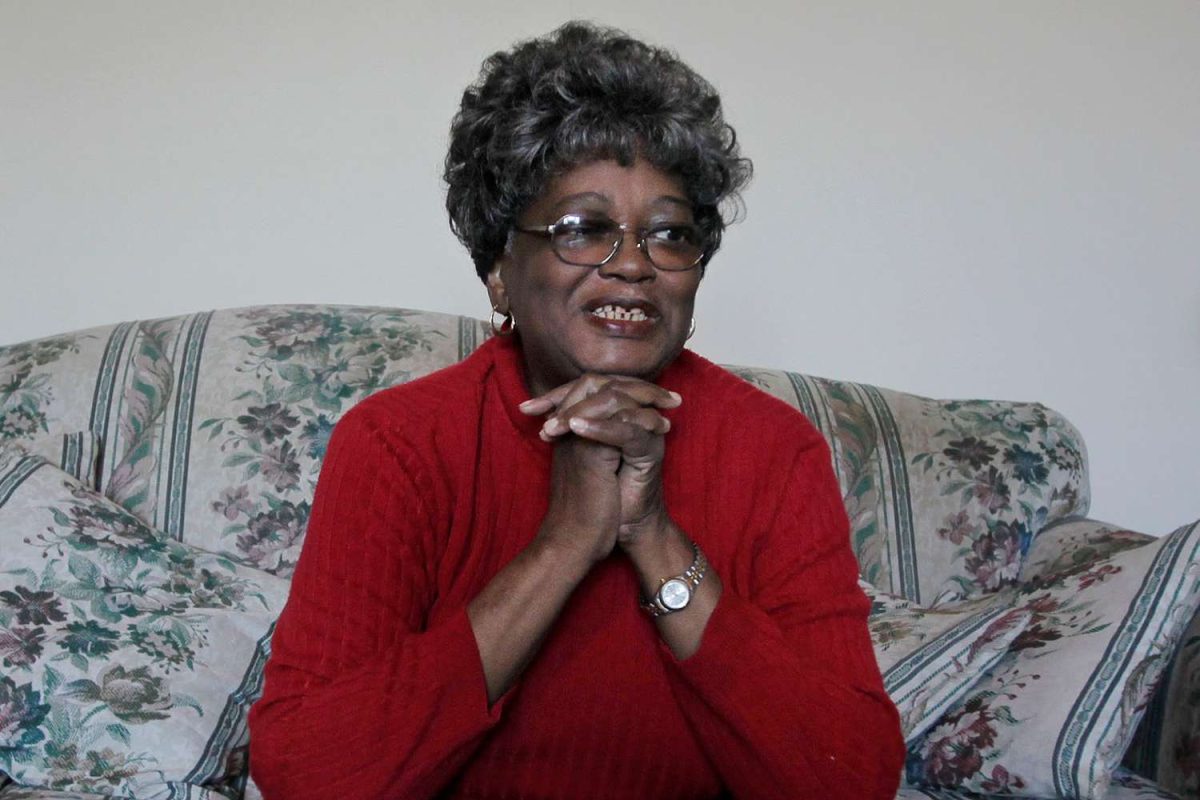
When you think about the Civil Rights Movement, you think of the three prominent figures plastered across the media: Rosa Parks, Martin Luther King Jr., and Malcolm X. With these three come significant movements such as the March on Washington and the Montgomery, Alabama, bus boycott. These three significant figures have shaped our history; they have overshadowed other individuals who put in as much time, effort, and strength to make a change, as seen in Claudette Colvin, who was actually the first to protest for her seat before Rosa Parks during the Montgomery Bus Boycott. This boycott was a 13-month-long protest in 1955, where everyone knows the story of Rosa Parks being arrested as a result of refusing to give up her seat to a white person. She was detained on December 1st, and word of her peaceful refusal of the seat spread quickly.
Nine months prior, a young girl by the name of Claudette Colvin similarly refused to sit at the back of the bus to give up her seat to a white individual. At the age of 15 in 1955, in Montgomery, Alabama, she took the bus home from school, where seating was arranged the same way, with white people in the front and black people in the back. Colvin had sat in the neutral section of the bus, where the front was for white people and the back for colored people. However, the bus driver ordered her to 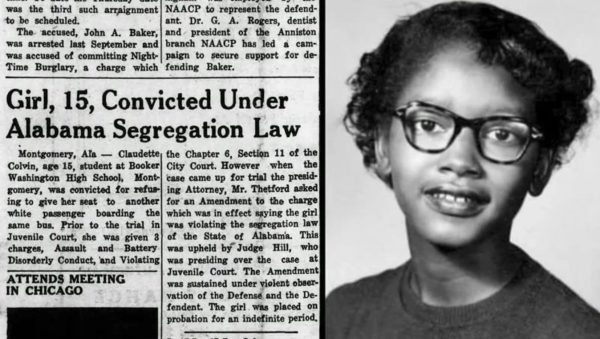 move to the back, as the bus filled up. The order was met with restraint and refusal to move, and the bus driver decided to call the police and have her arrested. Since she was a minor, the case was sent to juvenile court, where they decided to place her on probation only. She took action in such a terrifying manner by challenging the law at the age of 15. Sadly, most women who took action against the law in a similar manner to Rosa Parks are left in the shadows due to being quietly fined. The Civil Rights Movement’s notable figure, Rosa Parks, protested in the same way just nine months later. Colvin’s defiance was just as impactful as Rosa Parks however, all because it wasn’t published and shut down quietly, her tale wasn’t known. The reason Colvin was not the face of the movement was her pregnancy with her first child in 1965. The National Association for the Advancement of Colored People (NAACP) saw a pregnant woman as less desirable for the public to push for change and attract negative press and attention to the case.
After the Browder v. Gale court case, which ruled the segregated bus system in Montgomery, Alabama, to be unconstitutional, Colvin settled into her new life by moving to New York with her two children, whom she had between 1956 and 1960, to begin her career as a nurse.
 She retired in 2003 as a nursing aide at a nursing home in Manhattan.
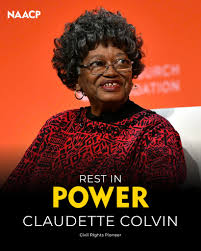
It was reported that just at the beginning of this month, this civil rights pioneer had passed away on January 13th. She was pronounced dead at the age of 86, and it was confirmed that she died of natural causes, according to her family and the Claudette Colvin Legacy Foundation, founded after Colvin herself. She left a lasting legacy as a woman, a civil rights activist, a nurse, and a mother.