
Inclusion and representation have become more prevalent in media and products over time, though Mattel’s Barbie continues to hold the title of the most inclusive toy line. Barbie Fashionistas remains the most diverse doll line to date.
Back on January 11th, Mattel added a shiny new Barbie to the collection: The Autistic Barbie Doll. With an array of sensory regulators and fidget toys, Barbie Fashionista #245 is the result of nearly 18 months of coll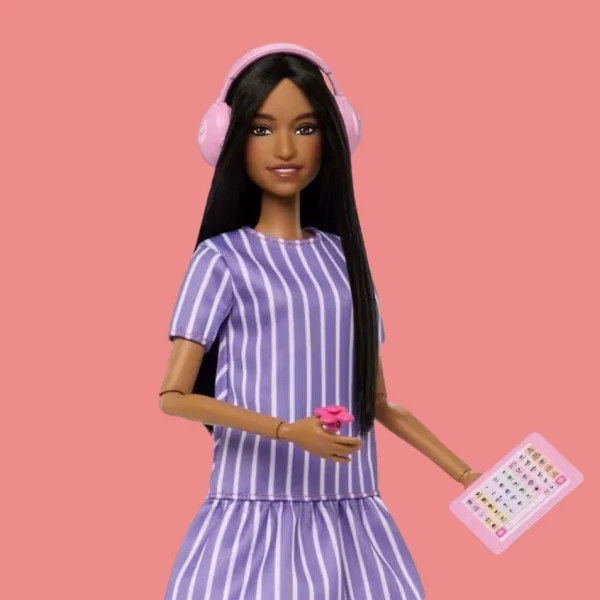 aboration with ASAN, an autism advocacy group. She comes with a pair of noise-cancelling headphones, a fidget spinner clip, and a tablet for communication, all selected to represent means of processing and regulating the world around her. The doll is also advertised as having eyes shifted to the side, meant to convey discomfort with eye contact. An autistic graduate of JFK High School, Eoin, was asked about the doll this week and said, “It sounds cool, I appreciate the visual representation.”
As refreshing as diversity is, some believe this particular doll is unnecessary, or even offensive. In online spaces like Reddit, people have expressed conflicted feelings. A thread on the discussion starts with, “I just feel like autism isn’t something you can visually pinpoint, and it’s weird to try.” It’s this notion that the doll’s main aspects are objects that sums up how some people feel there could simply have been an autism accessory kit, rather than a whole doll.
It unintentionally ties in stereotypes about autistic mannerisms that can’t be applied to the community as a whole, which ultimately leads to a handful of negative reactions. Dalen Law, a senior at Santiago High School with a diagnosis of autism, says, “It’s sort of unnecessary, and it doesn’t really represent a lot, but I don’t think I’m the type of autism they’re targeting.” It only encompassed widely known signs of autism, all visual, as opposed to the expansive range of autistic traits, such as hyperfixations or vocal stims. As Kade Machott, a Santiago junior, puts it, “It’s just, like, mainstream autism.”
Like all Barbie dolls, however, this one was designed to foster empathy and inclusion among young girls. It allows kids to see themselves in their favorite toys and exposes them to an ever-growing variety of people. Unlike other Barbies, ASAN wanted the doll to have articulated wrists, allowing her to move and flap her hands more. In their announcement on Barbie, ASAN says, “While one doll won’t be able to represent every way an autistic person can be, we wanted to share some of them.”
 Barbie displays autism with physical objects, but the doll herself features more subtle aspects of neurodivergence. Beyond her joints and eyes, her clothes were also created to be looser and more comfortable for sensitive senses. It’s argued that even if an accessory kit were produced, it wouldn’t provide the same notice and impact as a whole Barbie. Another comment points out that, “…Barbie accessory packs cost way more than a singular Barbie.” So it’d be less likely for people to buy a few items than to buy the doll. Overall, the autistic Barbie is a complex yet thoughtful addition to Mattel’s ever-growing inclusivity efforts, drawing attention to and understanding of neurodivergence.