

Newly discovered DNA from a pair of discarded gloves could finally give investigators a break in the disappearance of 84-year-old Nancy Guthrie or prove to be another dead end. How does DNA evidence work in criminal investigations? DNA plays a major role in criminal cases; it helps convict the guilty and exonerate the wrongly accused. DNA evidence is a crucial link to a suspect or to the elimination of a suspect. This case highlights the power and complexity of forensic DNA analysis.
A case That Captured America’s Attention
 According to The New York Times, her case has gained a lot of attention because she is “a vulnerable victim, taken out of a seemingly safe home; an unknown perpetrator, seen lurking in a mask; and a celebrity whose agonized pleas are broadcast around the world.” NBC News has this case timeline covering February 1, 2026, to February 17, 2026. Guthrie was last seen on January 31, 2026, and February 1, 2026, around noon, when she was reported missing. On February 3, 2026, her blood was found near the front porch of her house. On February 10, 2026, the FBI released her doorbell camera photos and videos of the day of her disappearance. On February 15, 2026, unknown DNA was found on gloves about 2 miles from Guthrie’s home. The discovery of DNA evidence may change the direction of the case.
How DNA Evidence Can Break or Stall a Case
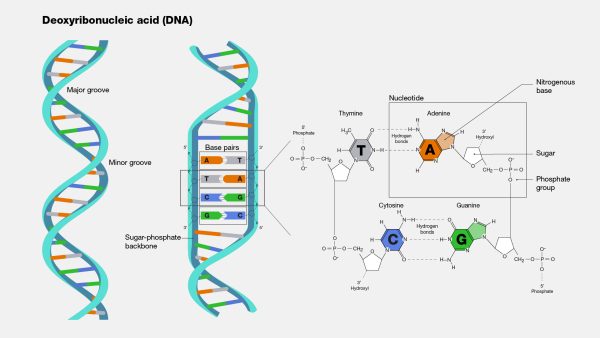 According to the National Human Genome Research Institute, DNA is “the molecule that carries genetic information for the development and functioning of an organism.” DNA evidence collected from a crime scene is a powerful investigative tool, since it can help identify a suspect or reveal whether a wrongly convicted citizen is innocent. For example, during a sexual assault, biological evidence such as hair, skin cells, or blood can be left on the victim’s body or near the crime scene. A DNA profile is created when investigators send suspect objects to the forensic laboratory for comparison to determine whether the DNA from other objects found at the crime scene matches. The Office of Justice Programs states that “DNA is a powerful investigative tool because, except for identical twins, no two people have the same DNA.”
How is DNA Analyzed
The analysis of DNA in criminal investigations begins with a careful collection of biological evidence from a crime scene. DNA is like a fingerprint—each person is unique. The sample is sent to a laboratory, where the DNA is extracted. Scientists analyze specific regions called short tandem repeats (STRs), which vary between individuals. These STR results are used to create a DNA profile. The profile can be compared to others in databases such as CODIS, the national DNA database.
What this could mean for Guthrie’s Case
DNA evidence found in the Guthrie case could lead to several investigative outcomes. For example, if DNA was found in clothes or an object at the scene and matches someone in a criminal database, investigators could identify a suspect they did not previously know about. If the DNA matches a person already questioned in the case, it could strengthen the evidence connecting them to the scene. However, if the DNA does not match a suspect, that person could be cleared, and investigators would look for someone else. New forensic technology can also test older evidence that couldn’t be analyzed previously. Even with these possibilities, DNA evidence must still be supported by other facts in the investigation.
DNA has become one of the most important tools in modern criminal investigations because it can help identify or eliminate suspects with high accuracy. The Guthrie case shows how forensic science is used in real-world situations to uncover important evidence.