
People love talking about their favorite show from when they were growing up. Often with Gen Z, it’s a 2010s kids’ show with debatable animation choices and easter eggs spread throughout. But no matter how bad the pauses and little animation mistakes got, a loyal kid would stick it out for all four seasons and the Christmas special. The titles of titans of the industry and captors of our attention were bestowed upon the beloved PBS Kids and Disney Channel. To this day, an undeniable nostalgia hits the generation like a wave when old childhood favorites take up the screen or long-remembered theme songs are casually added to the queue. So special was this time that the big hitters of kids’ animations today are trying their hardest to rerun the same storylines for round two.
There’s a slight problem with all these new reboots, however: the lack of originality. Even ignoring the recycled stories, the design of the settings and charac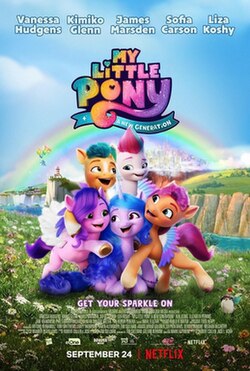 ters themselves looks awfully similar. From Dora the Explorer’s new look to My Little Pony Gen 5, it’s easy to see the fog of oversimplification that throws a shadow over some key points of our childhood. While no doubt aesthetically pleasing, is that all it has to offer? Creators have fallen into the habit of sacrificing individuality in animation that many shows already had, in favor of a repetitive, smooth, realistic 3D style. Santiago senior Kat Garcia has seen the undeniable shift and wonders, “Where’s the creativity?”
It’s the same problem that plagues the heavy hitters of the animation industry, like Pixar and Disney, and it’s bled down into almost all their productions. More often than not, you’ll find characters with huge eyes and comparable builds and face shapes, especially among women and girls. In fact, the last time we saw a 2D animated film from Disney was in 2011, with Winnie the Pooh. Fifteen years of a shift in style has proven profitable, but it’s gone from innovative to repetitive.
Not to mention the storylines themselves are often out-of-character imitations of the original. In the new generation of My Little Pony, for example, in one movie, the new protagonist achieved a main goal of the former series that had originally taken over three seasons. Essentially, the old plotlines were smushed into one big problem that was too easily solved, without any of the complexities or development from before. “It’s like all the battles and work they did meant nothing,” says Nnamdi Uduhuri, a student at El Cerrito Middle School. This is generally the case when studios attempt to re-popularize these shows for the next generation. It also takes away from the opportunity to grow further. Story lines now remain unexplored, and new characters and plots miss their chance at being discovered.
Now, while producers may try to relight the original spark, it’s safe to say that they’ll have a hard time remaking the nostalgic feeling we still get at the mention of Ninjago or Powerpuff Girls. Once that simple notion becomes clear, it’d be exciting to see all the new and special tales created for the younger generation, preferably with a wider range of animation styles. Dropping the massively popular 3D animation of today is the best thing that can be done; it’s what launched films like K-Pop Demon Hunters and Spiderman: Into the Spiderverse through the roof in terms of viewership. So, while realistically smooth animation is beautiful, it might be time to bring in something new to the studio.