

The world we live in today is a strange one. Since the development of the internet in the late 20th century, each passing generation has been increasingly influenced by technology, and this is also true of a popular form of recreation: video games. Nowadays, you see them everywhere, from indie games created by small developers that occasionally find their way into the limelight to company-made colossuses with budgets rivaling those of Hollywood blockbusters. In fact, in a survey run by Pew Research Center on the prevalence of gaming for teens, “85% of U.S. teens report playing video games, and 41% say they play them at least once a day. Four-in-ten identify as a gamer.” That’s a lot of big numbers, almost an unhealthy amount – if that many teens are playing video games so frequently, should we be worried?
Some would argue no, pointing to studies suggesting that playing video games improves cognitive performance and emotional intelligence; that survey from earlier even suggests it. And no, I don’t deny its validity – I would even consider myself an avid gamer who believes in gaming’s ability to promote healthy behaviors. But any toxicologist will tell you – matter of fact, not even they, just about anyone can unearth in their memory that simple phrase, “The dose makes the poison.” If you’re like me and play video games often, ask yourself: how many times have you thought, “Dang, I’m not finished with this task, just need a few more minutes,” or “I’m so close to leveling up! I’ll play for like five minutes more, then I’ll get off…”? How many of those times did it end up being longer than you planned? Be honest with yourself; nobody else can hear your thoughts and judge you for it.
As much as games can promote healthy behaviors, they can also negatively impact users’ lives— we’re here to explore how and ways to counteract it.
Addiction and Mental Health:
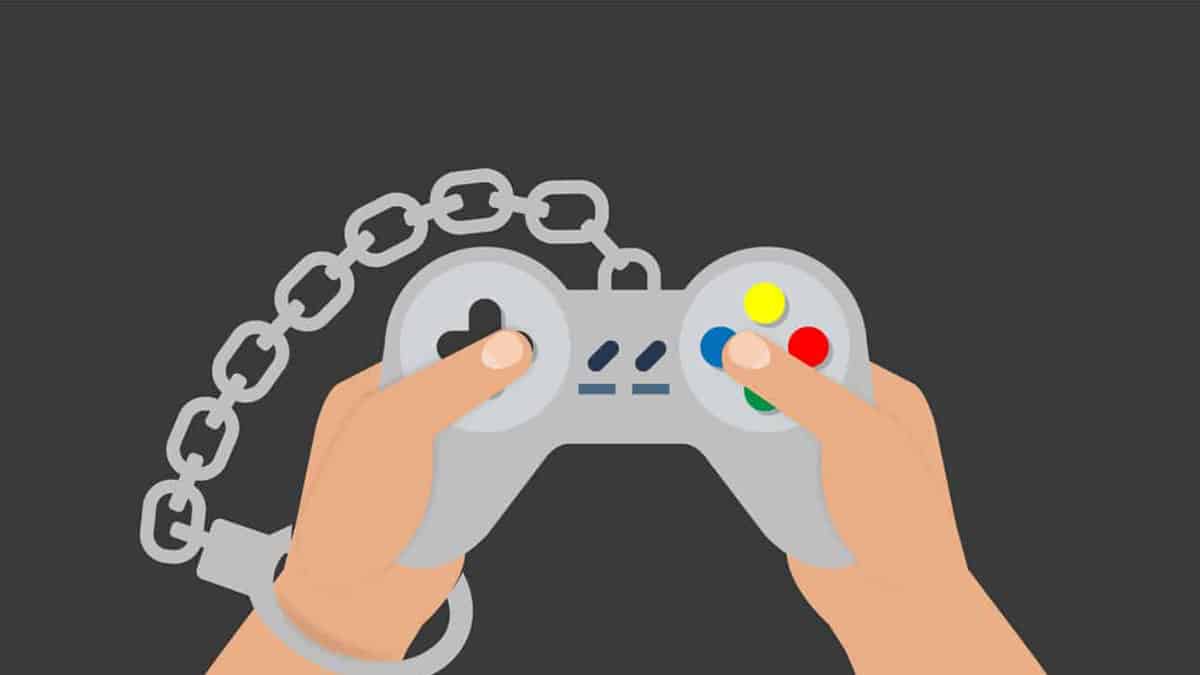
This is a significant issue, so it seems fitting to address it first and foremost.
The Cleveland Clinic defined video game addiction, or internet gaming disorder, as “a condition characterized by severely reduced control over gaming habits, resulting in negative consequences in many aspects of your life, including self-care, relationships, school, and work.” The direct cause of it is unknown, but a leading theory is that video games release dopamine, a pleasure-inducing neurotransmitter that, as seen in cases of other addictive forms, is a major contributor to addictive behaviors. In that same article, the clinic covered estimations of there being 1.7% to 10% of Americans with video game addiction (the wide range is a result of contested criteria for the condition to be diagnosed). This may not seem like a lot, but at the lowest number, that’s nearly 5.8 million people, which is larger than the entire population of Alabama in 2024; at least that many people in our country are hooked on video games.
The effects of this kind of addiction are not as extreme as actual substance abuse – after all, you don’t get organ problems or tooth decay or cancer or brain damage from your console or pc – but the usual symptoms are still present. As reported by the National Library of Medicine, patients of a Hong Kong clinic for addiction experienced “mood problems, refusal of school and social activities, physical inactivity, extreme anger and aggression, family conflicts, reduced amount of food intake, and various other health consequences.” These effects are detrimental for anybody, but teens are especially at risk; more than half of teens as of 2024 are jobless, freeing up time outside of school and other recreational activities, and with gaming consoles growing in popularity over the past few years, the increase in young gamers and gaming addicts as a consequence was inevitable.
On a side note, I myself see this in effect at school regularly. During any of my classes, whether or not we have work to do, I tend to see at least one or a few of the same people playing games on their cell phones: Clash Royale, Injustice, Roblox, Call of Duty, Brawl Stars, Chess, and more. I see it in government/economics, financial algebra, astronomy, and, yes, sometimes even in our BOSS program, when we’re practicing for our upcoming performances. I’d also like to say I’m 100% responsible and can manage my time effectively between gaming and school, but even then, I sometimes break bad and pull up a game when I should be doing something else.
This time in our lives is very important for healthy brain development and building healthy habits; it is a vital step in leading a sustainable adult life, but any addiction, even otherwise tame ones by comparison, can mess you up to an extent.
Inactivity and Physical Health:

In the earlier study of Hong Kong patients, one of the listed symptoms (and likely overlooked, producing the same effect as one of several bricks in a wall of symptoms) was physical inactivity, which is a major and apparent issue in itself.
Harvard Health Publishing highlighted obesity, alongside addiction, as a correlating issue. In playing games for hours on end, you spend less time engaging in a physical activity and more time sitting with your eyes locked onto a screen; in addition, studies they cited have shown that gaming also increases food intake, with the results from post-session lunch significantly higher for those who played games than those who rested in a sitting position. Both of these come together to heighten the risk of obesity in teen gamers, which may also have some influence on the growing number of obese Americans over the past few years. We don’t need any more.
It’s not all entirely about inactivity, however. Second only to their brains, the hands of gamers are very active during gameplay; this can be a positive, as one might consider it a form of hand exercise. However, exercising any part of the body excessively can lead to injuries. “Traditional controllers with buttons were associated with tendinitis of the extensor of the thumb,” said one study. “The joystick on the Nintendo 64 controller was linked to palmar ulceration. The motion-sensitive Wii remote was associated with musculoskeletal problems and various traumas.” In this case, the cause is the opposite of that of obesity: problems arise from hyperactivity instead of inactivity; the muscles in the hand and some ways above are being overused rather than underused. It’s no different from getting carpal tunnel, or compression on the median nerve that runs through your hand, from constant handwriting without a break – that’s also because you get carpal tunnel from enough gaming as well. In short, spending too much time playing your favorite game is linked to obesity through a lack of general physical activity and hand strain from overuse.
Ways to Mitigate Overuse
At this point, it may sound like video games cause more harm than good, which I don’t fully believe. It may also sound like I’m biased against video games, which I’m not. Like any pastime or hobby, it’s all about balance between what you need to do and what you can do. So, how can one manage their time on games?
One way that many others and I do this is through digital limits. Cell phones have a screen time feature that sets a time limit on how long one can play games per day, which can be controlled by a parent from their device. This method personally feels like one of the easiest and most effective ways to inhibit the amount of time spent gaming on a cell phone (which is also a huge aspect of gaming due to the cell phone’s inherent nature as a powerful portable device); when you can’t enjoy your usual gaming apps on the phone, it takes away a major distraction each day and forces gaming time into a small window, leaving room for other activities like work. These parental controls are also available on gaming consoles like the PlayStation, Xbox, and Nintendo Switch for teens and younger.
Seeking a targeted approach to mitigate negative impacts? You can also utilize the 20/20/20 rule to prevent digital eye strain: every 20 minutes, stop what you’re doing and look at something 20 feet away for 20 seconds. That was something not covered earlier, but the blue light screens we play video games on can cause digital eye strain and affect sleep, so those should be kept in mind when making a plan for managing screen time.
As for habits, try training your brain with environmental association. This was something I actually learned from my old therapist a couple of years ago, though it had to do more with my troubled sleeping schedule; she explained that by keeping some tasks exclusive to specific zones, you could train your brain to associate said zones with different states of mind in a way. In this context, it meant keeping the bed to “sleeping” and not additionally a “gaming chair”, but it transfers just fine to gaming: you could have your bedroom or wherever you play games as the “gaming room”, but select a different area in your residence as the “work station”. I do this when writing articles like this one; my bedroom is my sleeping/gaming area, but my kitchen’s island or my dad’s sofa is my work station. It may take some time to adjust, but it’ll certainly help at least to some extent.
Closing Thoughts:
Whether gaming is a good or bad habit depends powerfully on how game time is managed. Some students here at Santiago and around the world may not have a problem balancing recreational time with work, but many are struggling to do so, making it necessary to shed more light on this issue. Teens should be able to enjoy video games as a part of their daily life – connecting with friends, challenging themselves, streaming or training for esports or simply to give the player a break from hardships they may face – without them leaking into places where they shouldn’t be, and replacing the time meant for advancing one’s education and connecting with others in person.
If you’re someone who’s struggling with excessive gaming and recognizes it as an issue, please consider any of the recommendations I made earlier. If you feel it’s a struggle too big to handle on your own, or maybe there’s some bigger issue that needs gaming to counteract its effects, please reach out to your counselor – there’s a program here called Wellness Together, with well-trained therapists that you can discuss your issues with. I myself took advantage of the opportunity during my first two years here; those were tough times, but I got through them with their help.
All in all, as tough as it may be to break free from this habit, you are not powerless. Countless people have been able to break free from far worse – it’ll take some time and effort, but you can always get out of that “five more minutes” mania. You’re the one holding the controller, so why let it control you?