
“Us” Vs. “Them
Have you ever had a hurtful nickname as a child? How did that make you feel? Isolated, I imagine. You’ve most likely witnessed how words provoke quarrels or altercations among parties, whether in your community, on social media, or in politics. Although you may have assumed, with time, that such adolescent jeers on appearance or names would be a thing of the past, that is not the case. In fact, people tend to divide each other into “us” and “them,” and in the most extreme cases, even incite violence, catalyzed by verbal abuse and taunting, against entire nations, ethnic groups, or people of unalike skin color. This raises the question, “Where is the boundary between freedom of speech and freedom of hate?”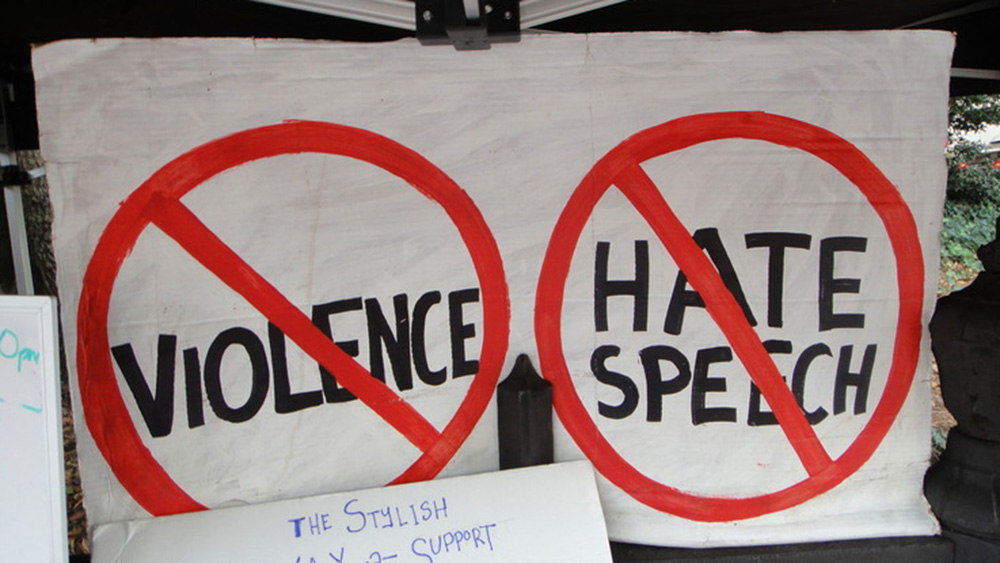
Logistics
However, if there were a boundary in place, wouldn’t that infringe on our First Amendment rights? Could we really be prosecuted for expressing an opinion? And which speech is considered acceptable and which unacceptable? I would assume no reasonable person would desire any form of hate in their proximity, so when proposals to set a boundary or even ban hate speech are put forward, it’s generally understandable that they attract support. It seems logical that if a law can somehow eliminate something hateful, that would be a positive law. But could this theory possibly be too rash? Are you willing to limit your freedom to fight hate speech?
A Precursor

Well, hate speech precedes hate crimes and other acts of violence, making hate speech a prominent factor that cannot be overlooked in modern-day society. Think of mass genocidal hate crimes, like the holocaust, or the Rwandan and Armenian genocides. These events were brought into fruition through hatred and negative free speech. Former UN Special Advisor, Adama Dieng, quoted the words of the Secretary-General of the United Nations, stating “Hate speech is in itself an attack on tolerance, inclusion, diversity and the very essence of our human rights norms and principles […] it undermines social cohesion, erodes shared values, and can lay the foundation for violence, setting back the cause of peace, stability, sustainable development and the fulfilment of human rights for all.”
A Solution
Knowing now the dangers of abuse of freedom of speech, what can we do to eradicate it? The sad reality is, nothing. There is nothing we can do to eliminate hate speech without destroying our freedom. We can, however, empower. Empower one another and combat against hatred and negativity. Hate will always reside in this world; however, so will love. People will use words to break you, to paint you as inferior. They will aggravate and
instigate situations, poisoning the minds of the innocent. Steadfast, hold a strong mind.
While we cannot implement a law banning hate speech, we can raise awareness of it. In 2024, hate incident victims totaled 14,243, with 11,679 incidents. These statistics prove that the abuse of free speech is a definite problem in our society. In other words, we should inform others about hate speech; if an extremely unruly remark is jabbed toward you and seems like a precursor to violent acts, report that person and their behavior.
Hate speech conjures nothing but issues in our society; however, if we wish to maintain our freedom of speech, we cannot “ban” it. What we can do is uplift each other, as well as report any rash offenses of verbal abuse.