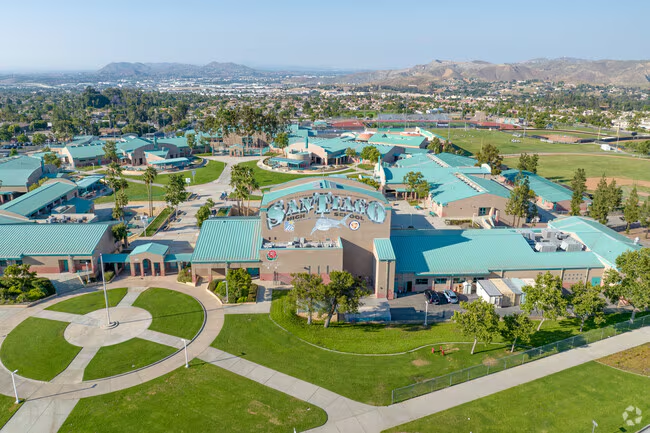
On November 12, forty Japanese dance students from Shibuya’s VAW School spent the day at Santiago High School, bringing cultural exchange, shared performances, and new perspectives to campus. One day, you’re in Japan, studying dance as if your life depended on it, the next, you’re in the United States of America, conducting a dance battle in the gym at Santiago High School. This wasn’t just an exciting one-day event—it gave both Japanese and American students a chance to see daily tasks through someone else’s eyes.
According to the U.S Department of State and Department of Education, “U.S. students…benefit when they engage with peers from around the world…high school exchanges promote cultural curiosity, a global mindset, and mutual understanding.” These forty Japanese students showed real courage—many were traveling outside their country for the first time, navigating a new language, and thousands of unfamiliar faces. This cultural interaction fostered new friendships and unexpected moments of understanding.
Santiago High School hopes to participate in meaningful cultural exchange. Each of the 40 students was paired with one Associated Student Body (ASB) member. Ruby Kelly and Charles Ramshaw, heads of hospitality, led the tour of these visitors. “We wanted to show the Japanese the American culture and show them what American schools are like and how we live every day,” said Kelly. “It’s kind of an original experience…seeing a pretty stereotypical regular American high school, especially one in California that’s outdoors, is really cool to them,” added Ramshaw. During their visit, they walked into different classrooms and played different American games like Duck, Duck, Goose. Moments like these helped visitors see what a typical school day looks like for students at Santiago while allowing ASB to share parts of their daily routines.
Seeing Our School Through New Eyes
As the group moved from classroom to classroom, students were intrigued. “I remember them walking into my language arts class. Everybody smiled as soon as they walked in. I immediately noticed their style. They just looked so put together. They were so unique,” said freshman Ava Gomez. Interactions like these highlight the importance of diversity within learning environments. “They were all dressed so differently and uniquely. It reminded me that it’s okay to be myself and not look the same as everyone else,” said Jada McDonald. Her reaction reflected a common theme from the day. Students found themselves appreciating new perspectives simply by observing how the visitors carried themselves.
A Dance Battle That Turned Into a Cultural Exchange
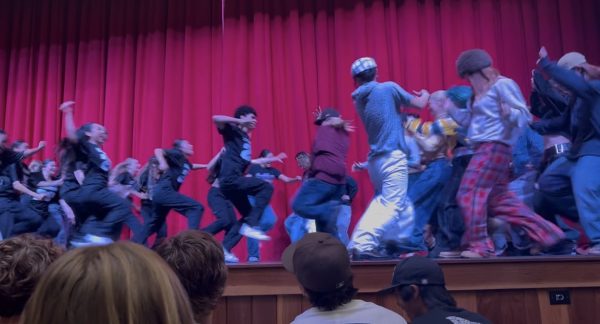
Later in the tour, the most memorable moment happened in the gym. The Japanese dancers met with Santiago’s hip-hop team. During the dance-off, hits were blasting, and the crowd was screaming. “The dance off was really fun to see, and they danced pretty differently from our dancers. It was like a cultural exchange there,” agreed both Ramshaw and Kelly. Talking about the students’ talent and passion, Kelly added, “They all want to be professional dancers. They’re good. They’re excellent…it’s their passion.” The dance-off became one of the clearest examples of how two cultures, even with different styles and techniques, can connect through a shared love for movement.
What Visiting Students Noticed Most
 This was not only interesting to the students who observed, but also to those involved. “As ASB, I think it’s good for us to see how different people see the world, how their situations differ from those in other countries. Just trying to communicate with someone who doesn’t share your language is really interesting because it almost forces a connection between you two,” highlighted Ramshaw. One way these students improved their communication was by sharing a meal, a symbol of cultural and social connection. During their gathering, ASB students and Japanese students shared Chick-fil-A for lunch, laughing as they compared their favorite sauces and tried each other’s orders.
Other students created connections in the classroom. “My experience with them was small, but I won’t forget the excitement when they walked into my classroom,” Jada added. “They were so sweet. I waved at them, and we even exchanged a few compliments.” These small interactions showed how even brief moments in the classroom can help break barriers.
Lasting Impressions
 These experiences highlight the importance of exchange programs and cultural immersion. “A couple of other ASB members and I talked about it. We want to go to Japan now and see what we can learn from them and how they live. Because they were so shocked by us, imagine how shocking their world is,” noted Kelly. “I don’t think there’s anybody here that had a bad time with the Japanese students, and I don’t think there’s any student on campus that wouldn’t want to be part of some cultural exchange,” remarked Ramshaw.
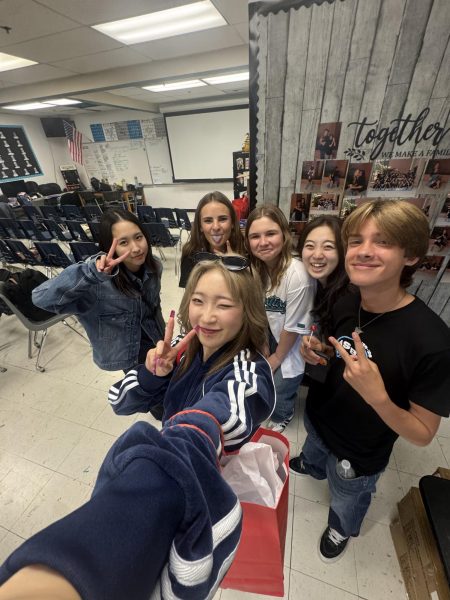
According to the U.S Department of State, “experiencing a new culture can help you better understand yourself and the world around you.” These students’ lives were changed in just one day. Before they left, the dancers and ASB members snapped selfies together—peace signs and smiles all around—capturing a moment that didn’t need translation. It was a reminder of how one small day can create a shared connection.