The Government Shutdown began on October 1, 2025, lasted 43 days, and reopened on November 12, making it the longest shutdown in U.S. history. Hundreds of thousands of federal employees were furloughed or forced to work without pay. Many contractors were also abruptly unpaid. The shutdown caused significant disruption across our country, including FAA flight restrictions and thousands of canceled flights, resulting in substantial economic losses for airlines and travelers.
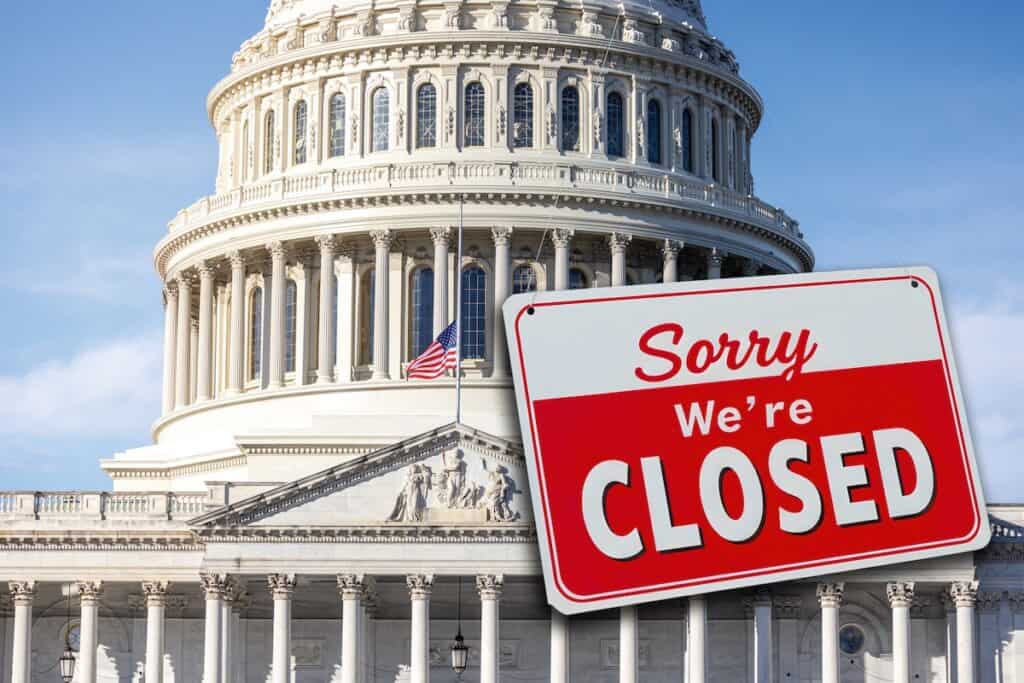 Government shutdowns generally happen when Congress can’t agree on a budget. Every year, Congress must pass bills to fund the government, including national parks, food programs, airports, the military, and more. The House and Senate had significant disagreements about how much money the government should spend, which programs should be funded, and specific policies some lawmakers wanted to add to the budget bills. Neither side was able to compromise, and the October 1st deadline passed without a budget. Because there was no funding, agencies had to close. A political standoff kept it going for a long time as Congressional leaders argued over spending levels, border and immigration policies, and funding for social programs. Because this happened, hundreds of thousands of federal workers and contractors either had to work without pay or were sent home unpaid. Primary public services slowed down or stopped altogether. Government shutdowns affect everyday people in significant ways.
During government shutdowns, social safety nets, such as SNAP, WIC, school lunch programs, housing support, and childcare assistance, face delays or temporary funding issues. Millions of families worry about not getting their food or other benefits on time. This can create stress for families who rely on these programs to get by.
It also has a significant impact on federal workers, who may not be paid, and some people cannot afford not to be paid. It could leave them struggling to pay rent, buy food, or cover bills. It may leave them with no choice but to take out loans or borrow money, which only adds more stress. Some contractors may never receive back pay, which could permanently reduce their income.
Air traffic controllers and TSA workers had to work without pay. Many airports faced staff shortages. This caused flight delays and cancellations, resulting in significant financial losses for airlines and travelers. Shutdowns also weaken the economy in several ways. It causes workers to stop spending money; it also causes businesses near federal buildings to lose customers, slows primary services, and ultimately wastes time catching up on backlogs after the shutdown ends. Although the government may “save money” during a shutdown, the harm usually outweighs the savings. Repeated shutdowns can make the government look unreliable and cause people to lose trust in their leaders. The economy will be feeling the effects of this for
months.
It also has a significant impact on federal workers, who may not be paid, and some people cannot afford not to be paid. It could leave them struggling to pay rent, buy food, or cover bills.
It may leave them with no choice but to take out loans or borrow money, which only adds more stress. Some contractors may never receive back pay, which could permanently reduce their income.Air traffic controllers and TSA workers had to work without pay. Many airports faced staff shortages. This caused flight delays and cancellations, resulting in significant financial losses for airlines and travelers. Shutdowns also weaken the economy in several ways. It causes workers to stop spending money; it also causes businesses near federal buildings to lose customers, slows primary services, and ultimately wastes time catching up on backlogs after the shutdown ends. Although the government may “save money” during a shutdown, the harm usually outweighs the savings. Repeated shutdowns can make the government look unreliable and cause people to lose trust in their leaders. The economy will be feeling the effects of this for
months.
Some people support shutdowns, arguing that they force the government to reduce spending, draw attention to wasteful programs, give lawmakers leverage to demand changes, and stop laws or policies they may disagree with. However, these are just political arguments and not proven benefits. However, shutdowns hurt families who depend on their paychecks and/or food assistance. It is unfair to workers who still have to show up without pay. It damages the economy and does not actually fix long-term spending issues. It has caused chaos, confusion, and stress, and hopefully, all the damage from this shutdown will be fixed soon.