
Have you ever wondered about the behind-the-scenes of some of your favorite animated movies or favorite comics?Take a look at this interview with cartoonist Mike Kunkel, where he explains how he got to where he is today and the process behind some of our favorite cartoon characters.
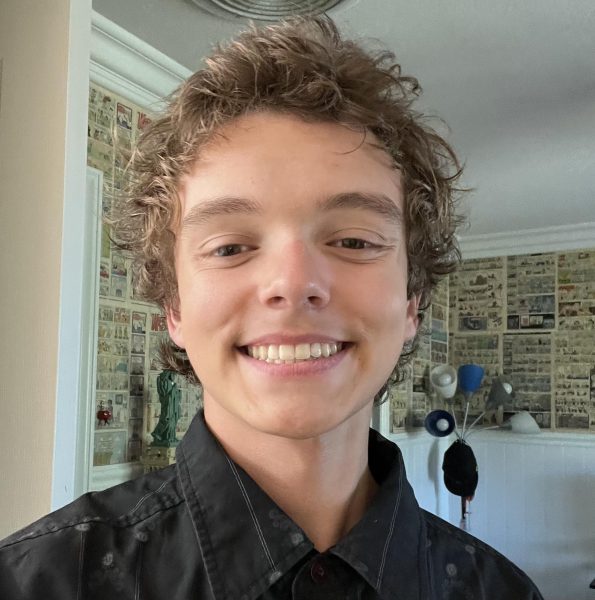
Dominic: First, start off by saying what you do. 
Mike Kunkel: What I do is, I am a cartoonist. It’s what I’ve wanted to do ever since I was a little kid, and I draw character designs and storyboards, and I direct shows for animation. I also illustrate and draw children’s books, graphic novels, and comic books. Anything that would have to be cartoony, that’s what I like to draw.
Dominic: What are some of the projects that you’ve worked on?
Mike Kunkel: I was an animator on Disney’s “Hercules” and “Tarzan,” and I animated on paper traditionally. That was certainly something that was a throwback. It was all 2D animation at the time. Storyboards for “Smurfs”, the recent “Garfield” movie, and “Spider-Verse”. Also, TV shows like “Mickey Mouse Clubhouse, Kick Bukowski if you remember that show, and a few others here and there. So that would be my animation side of things that I’ve worked on. I’ve also done it; if you’ve ever played “Where’s my Water”, I designed the swampy character. And here and there, different studios doing development where they would come to you and they would go: “hey we’ve got an idea for these characters, can you draw some versions of them?” Or “we’re working on this project, and we just need some storyboards”. One of the things I worked on last year was working on developing a “Flintstones” movie. It’s fun to play in that cartoony world, you know?
Dominic: Do you think that comic strips will be around forever?
Mike Kunkel: You know, I do, but maybe in different forms. That printed form is so special, and it’s so nice to have it in that tangible form. But it’s evolving. We don’t cut them out as much as you and I may do because we love the format and it’s precious to us. People still share them by emailing them or texting them, or things like that. But I think they’ll always be around; it just might be the format. They’ll be around. It’ll be our job to make sure that they don’t go away; that’s how I take it.
Dominic: What are some of the comics that inspired you when you were younger?
Mike Kunkel: Calvin and Hobbes, Garfield, B.C, Herman, if you’ve ever read Herman. I actually have an original Herman hanging up, which is kind of cool. A lot of that era of Hagar the Horrible, comic strips that you’d find in the newspapers. Definitely Garfield (Jim Davison) and Calvin and Hobbes (Bill Watterson) were at the top. I remember when Calvin and Hobbes first came out, where I was. I used to go ride my bike to the local 7/11, I’d buy the three newspapers they had, I’d walk outside, and I’d pull out all the comic strips and throw away the rest. I remember them advertising that there would be a new strip coming, and it was Calvin and Hobbes. I remember cutting it out when it first came out, and I was like: “I’m in! I want more of this!” So those would probably be at the top. All the more cartoony ones. Though if you ever saw the Spider-Man ones that Stan Lee did and John Romita drew at times. Those were wonderful. And as I’ve gone along, I’ve found others. Dennis the Menace is a huge influence. Storywise, I came upon an older one, Walt and Skeezix. It’s an ongoing one where, actually, the characters age throughout the whole comic strip.
Dominic: Did you have another job before becoming a cartoonist? What I was thinking was that after high school, I would go into a trade and then on the side, I’ll submit different comics to syndicates, wait until I get published, and do that instead of whatever trade I’m going to do.
Mike Kunkel: Yes and yes. Getting into doing the comic strips is going to be a journey. If you can have something that pays the bills, just makes it easier to find work as well. But also allows for a different brain process. You can do that good work ethic and then let all your creativeness be on the cartoony side, and just submitting them. The great thing about these days is, when I was first coming into cartooning and things like that, there weren’t as many outlets. You either got into the newspaper or magazine, or that was it. There was no internet or printing our own books or finding publishers out there. The great thing is you can get a job that is stable, and then my creative side is over here, and you can put it out online, you could put out your own books, you can do kickstarters, and be the independent cartoonist before you get on with a big publisher or anything like that. For me, I worked in restaurants, I worked in a mall selling shoes. Different jobs like that before I actually even got into animation. I always wanted to be on my own, working on my own stuff, which is what I do more these days now. Having the other jobs allowed me to split my brain a little bit. I always carried a notebook and was always writing ideas. I think that’s a good plan for you, though.
Dominic: How long have you been teaching different classes?
Mike Kunkel: I’ve taught for 15-20 years now. And I will say that I learn a lot. Being around talents like yourself and seeing what you guys come up with. I always tell everybody the best way to learn something is to try and teach it to someone. And that could be math, or that could be cartooning. You’ll get better when you have to figure out: “What do I do?” I always like calling myself a cartoonist. I am an artist, yes, but I like that term. But to explain it to anybody, you’ll get better at it because you have to think about your reasons and process.
Dominic: I think taking that class teaches me how to have more ideas. Recently, I’ve had an idea for a comic strip set in the 90s because I think the 90s are cool. So I think that implementing that into something I like doing, drawing, I think that would be a cool thing to do, especially if it got published or something. 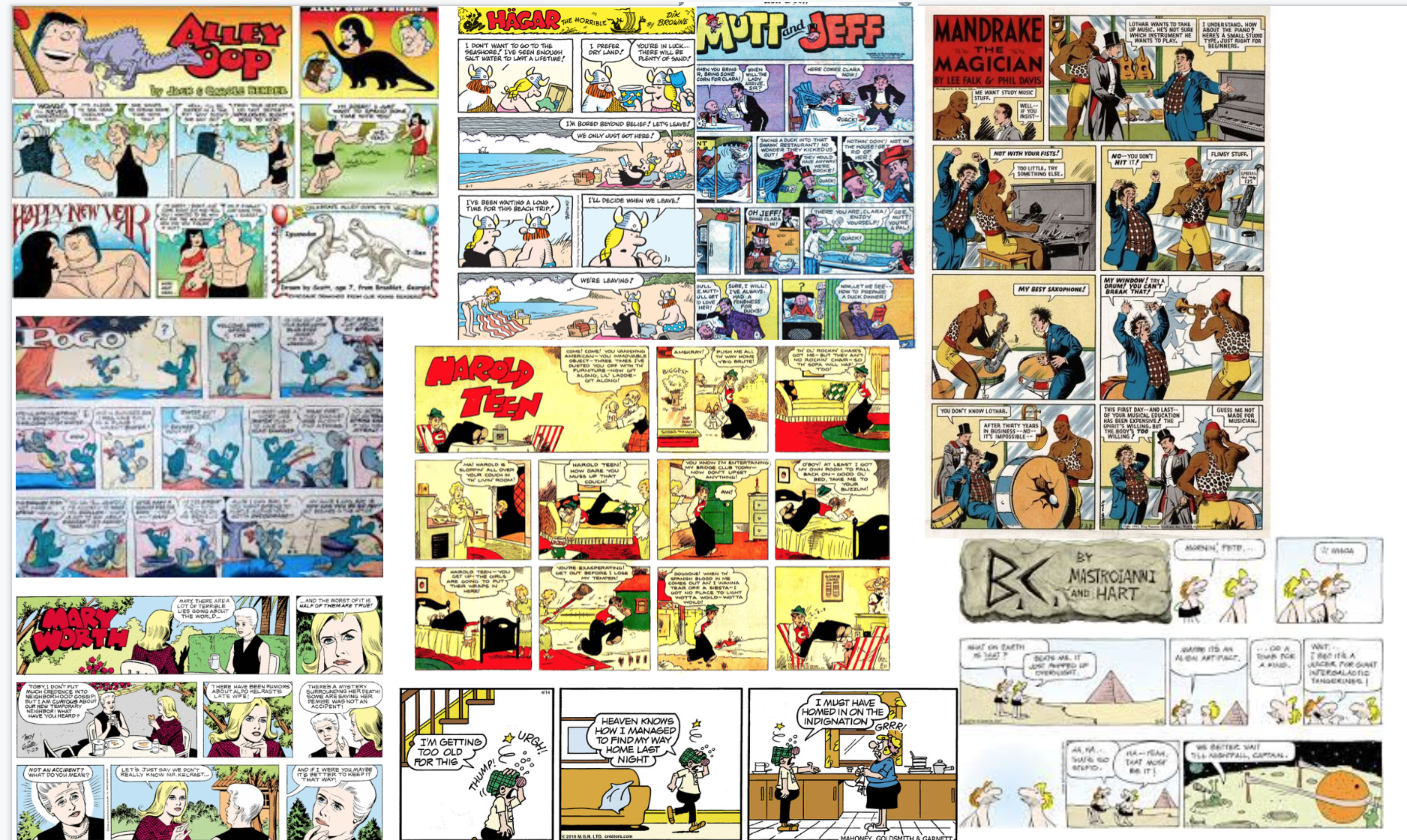
Mike Kunkel: Well, the fun in that is you get to explore those ideas, and what I love about comic strips or graphic novels is you get to immerse into that world. If you wanted to do a comic strip about a group of friends in the 90s or had a 90s feel to it, it would be a great way for you to time-travel a little bit. It’s good to know your touchstones, the things that inspire you. When you get those moments where you don’t know what to work on I always tell everybody, is there music, is there a film, is there an era, is there something that is your touch stone that you can go to because it will always help.
Dominic: Do you have any advice for upcoming advice for artists, cartoonists, or animators, anything in that type of area?
Mike Kunkel: A lot of what we’ve been saying, which is know what inspires you and lean into that. If you like the comic strip format, if you like a certain era, if there’s artists or styles that you like, try and study from them. The other thing is just keep at it. The only way you’re going to get better is to do it. The one thing with art is you do not learn it by osmosis, which is, I’m just going to be around, I’m just going to soak it up. You have to physically do it, make mistakes, learn from those, and get better. And so that’s what I always tell everybody: just do it, and don’t get precious about it. Rough something out, draw an idea, just get the idea down, and don’t be worried if it’s got to be perfect. I’d rather it be finished than perfect. It’s too often we outthink ourselves, and so if I give any encouragement, it’s to just dive in and do it. Comic strips are great for that because if you do an ongoing comic strip, every next one you do is learning.
Dominic: Yeah, I think from taking that class I learned that it doesn’t have to be completely done or perfect, or that’s the only version I do. I can do multiple different versions, and it’s cool because it’s my own schedule, you know? It’s not like I have to have it done by a certain time, unless it’s for a job. Right now, I can take as long as I want and do as many different versions as I want.
Mike Kunkel: And you’re also figuring out what works, what tools you like, and how did your process work. Eventually, I do encourage you to get to a point where you do go… and you may be doing this with the cartooning for your school. That’s great, you probably have a deadline. You have to turn in one a week or one a month or something, that’s good because it forces you to go “I’ve got to get something done by this time frame”. But how you get to it, it doesn’t have to be perfect right out of the gate. It’s good to have that freedom, but also motivated to get stuff done.
Dominic: Is there something you learned later on that you wish someone had told you at my age?
Mike Kunkel: I think it’s just how to make my work shareable. How to, in some way, share it with people. I would probably want someone to give me the tools to be able to do that. And also to just show me different pathways. There’s comic strips, there’s comic panels, they can go in the newspaper, but they can also go online or a magazine. What are all the options? That was something that I didn’t know. When I went to college, I just assumed I could go there and say I want to be a cartoonist. And that’s what I did, and they were like, “That’s great, but you have to take these classes too.” And I was like, “ugh, I don’t want to take biology.” So that is something that I wish someone would’ve sat me down and said, “Here’s what you can do with what you love to do.” Yes, I loved the newspapers and comic strips, but if that didn’t work, what else could I do with it? I think today you have a lot more options of where you can put your cartoons and what you can do with it.Dominic: That’s why I’m going to try and start posting more to try to get my work out there more and maybe even start to develop a continuous comic strip instead of just random ones.
Mike Kunkel: So I would challenge you. Two things: one, if you wanted to do just the Instagram format, do it so it’s consistent enough at some point, you’ve done 30 of them. You’ve done 40 of them. Now you could connect that into a little book. So the work you’re doing on Instagram isn’t just to share for free, it’s leading you towards: I’m going to eventually put out a book.
Dominic: Why do you think it’s so important to still be creative even as you grow up? Whether that’s with drawing or any ideas that people could have.
Mike Kunkel: For me, I can’t help it. My brain just thinks like that. And it is all kinds of things. Yes, I love to draw, but I also love legos and I love learning magic tricks. Things that make my brain think in other ways. So the creative part, I think it gives back to you because if you have a creative spirit in you, you’re always looking for a way to present it in different ways like that. It’s very much our human nature if you’re a creative person. Sometimes we can’t just help it. Why do you like to be creative?
Dominic: I think that, especially if people are having a hard time, being even a little creative can help them express their problems in a different way. If someone doesn’t like telling people about their problems, they could draw it or write a story about it. It’s just a way to be free, but also to totally ignore problems in your life. I think if the problem is important, let’s say your car broke down, it can be a hard time for you, but if you draw something out, and it doesn’t even have to be related to it, it just kind of reminds you that it’s not the end of the world. You’re still human, and you have a purpose: to make something.
Mike Kunkel: I like that because it helps give someone a way to have a better perspective on something. Being creative can help get that out of you a bit. You might have drawn something where someone else sees your drawing, and that encourages them. I like the creative spirit of being able to create something to share with someone that’ll hopefully encourage them on some level and make them smile. It doesn’t always have to be the out-loud laugh cartoon, but maybe just enough that it makes them smile.
Dominic: Have you always liked animating or comics more? Would you say you read more comics as a kid or watched more movies?
Mike Kunkel: That’s a good question. I probably read more cartoon books and comics. But in my mind, growing up, I thought I was going to get into print and that avenue of cartooning. One of my very best friends was an animator and has worked in animation all these years, and he kind of became my mentor. He taught me animation, and I realized it was a good bridge to something that I love. I love animated cartoons and animation because of the life that’s in it, but I know how much work goes into it. But I love when I can just hand you a book, and you can go off and sit somewhere and read through it. I feel like there’s a different interaction with it on that level.
Dominic: What do you think is the best representation of animation that you’ve seen? It doesn’t have to relate to the story, just how good the animation is, and how well you think the characters are connected to other people.
Mike Kunkel: I like more classic Disney and Warner Bros. animation. I grew up loving the 50s and 60s movies of Disney. I love seeing the sketchier lines because I feel like I can see the artist’s hand more. I like Disney for its technique, but I like Warner Bros. for its humor. I would always watch Chuck Jones cartoons. Certainly, his drawing and posing is a huge influence and inspiration for me. 80s and 90s movies because I got to work on them. Hercules and Tarzan were tremendous to be a part of. Nothing against the CG movies that are out now, and I think there’s been some tremendous ones. The Incredibles was really good, Spider-Verse broke a bunch of styles, and things were very cool.
Dominic: Yeah, I would definitely say from my childhood, I remember watching a lot more of the hand-drawn stuff like Sword in the Stone or Aristocats. Those all have a more nostalgic feel to me than the newer 3D ones coming out today. Which I’m not hating on, by the way. This kind of makes me think of this question, it’s almost a little sad, but do you think that in the future there will be a lot of AI movies, comics, or things like that? With the way AI is progressing
Mike Kunkel: Yeah, AI is not going away. The key thing I always say is harness. Don’t be afraid of it. I think right now the pendulum has swung to where you’re seeing all kinds of content from everybody who never was creative to “I can make a movie!” or “I can make a book!” when it’s really the computer that’s doing a lot of it. I think that will soften and come back because I think people will get tired of it because it won’t feel pure. It won’t feel like a true creative soul was behind it. And so I think it’s swinging back to where it becomes more of a tool again. Right now, I think people are just using it to do everything, but I think more people are going to take it and go, “Can I just use it here?” I don’t think it’s going to take over, but I do think it has the potential to mess the creativity up. But at the end of the day, it’s still only on the computer. What you can do is you can take a pencil or a pen and draw on a tangible piece of paper and show somebody real art, real drawings, it’ll never be able to do that. No matter what machine they hook up to it, it’s not doing it the way an actual human artist would do it.
Dominic: What would you say is the first step to creating your own TV show? I think the two tv shows that I really like personally are South Park and Beavis and Butthead. How would I get to that level? Watching the very early Beavis and Butthead, the first couple of episodes, it looks like it was drawn on scratch paper.
Mike Kunkel: Pretty much, yes, and it was intended to be purposefully raw like that. There’s a lot of avenues these days. It used to be put together with a pitch, here’s what the characters look like, here’s the story bible, and you hopefully get an opportunity or interview to be able to pitch it at a studio. Nowadays, you can show something online, you can do little bits of animation on your Instagram, and the thing I tell everybody is try not to do big stuff. Do little bites. You don’t have to do tons of stuff; it’s just about getting awareness. The good and bad of that is you can do it on your own, but a lot of studios want you to do it on your own. They want to know that you’ve done all the work and you’ve gained the audience, and they’re just going to go: “Thank you” and put it on their streaming and make the money off it.
Dominic: I think, like you said, having that raw look to it gives it more of a personal feeling to it rather than having it be super perfect. Also, like with South Park, and how it was just paper that they moved around, basically like stop motion. Knowing the work that was put into it and the true determination that people had to make them, I think that makes them way more enjoyable to watch.
Mike Kunkel: They do feel like they’re not trying to be perfect. They just want to get across strong personalities. If one of the scenes bumps funny or the lines squiggle a little bit, they were designed to get the episodes done quicker and get the ideas out. Don’t let it get precious like “oh, the drawings are not right” or “I have to fix this,” just make it.
Dominic: I think shows like that also tell me that they were made just for the fun of it, not to make any money or things like that. It was made just for pure enjoyment for people. I think that’s the cool part.
Mike Kunkel: And that’s the creators’ enjoyment coming across. That’s what I love. You can hopefully see that they had fun with it, you know?