
What’s Changing and Why
The popular online platform Roblox has started using a new age-verification system that requires users to verify their age before participating in any chat or voice communications. The development comes as part of a wider initiative by online platforms to ensure that underage users remain safe from any untoward experiences while interacting with other users on their platforms. According to a notification from the official Roblox Newsroom, users will be categorized into age groups based on facial analysis and ID verification, after which they will be allowed to communicate with other users in their respective groups. Users will be categorized under six different groups.
This new verification method is quite different from the “self-reported” age players used to verify their ages in the past. But now, Roblox wants to verify a user’s actual age by using a camera or ID to ensure a secure chat. The company claims that any images and videos used in facial estimation are deleted immediately after the process.
How Age Verification Works
Under the new rules, users are prompted in the app to either complete a short facial-age estimation video selfie or provide ID. Once verified, players are placed into one of six age groups. Users 9 will not have chat access unless a parent gives consent. According to Roblox’s support documentation, users ages 13 and older who have verified can also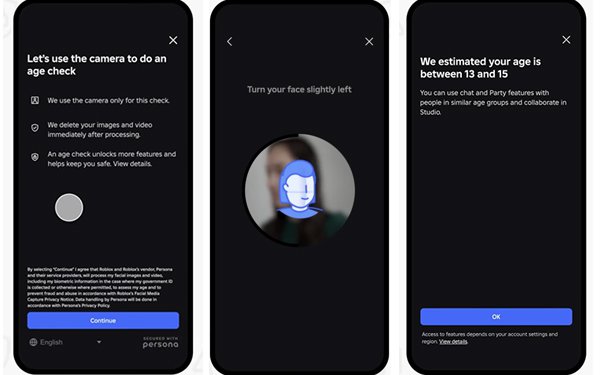 use voice chat in experiences that support it.
Roblox said this system is intended to block communications between adults and minors who don’t know one another in real life, a feature that many parents have demanded. Critics say it does more than other platforms, which typically don’t require age verification before allowing young users access to chat functions.
Industry Context and Safety Debate
The decision by Roblox follows a broader trend among online platforms, especially those in technology and communication, to be stricter about how youths communicate online. Their competitors, such as Discord, are reportedly implementing similar policies that may require internet users to scan their faces and present ID cards issued by their respective governments. Social networking sites like YouTube and Twitch are reportedly experimenting with age-verification technology to protect younger internet users.
However, age verification remains a debated topic. Some cybersecurity experts argue that facial age-verification technology may not always be precise and can lead to misclassification. Additionally, there have been reports of software glitches that may prevent users from accessing chat after verification. Most issues are being debated in community forums, where users have reported difficulties accessing chat and voice after verification.
YouTuber Reactions
YouTubers have also reacted to the updates, with thousands of viewers watching their content and offering varied opinions. For instance, there is a video titled “Roblox Age Verification is a Complete JOKE!!” The video criticizes the system’s execution, which has failed to run smoothly for users who expected it to.
In another reaction video, “How Roblox expected us to react to the age verification update,” there is further reflection on community expectations versus reality, with commentary on how chat has changed the gameplay experience.
Why It Matters to Users
For many players, especially teenagers and young kids, communication is vital. For instance, the rollout of the age verification feature affects how a user interacts with friends they made in the game. It is argued that the rollout could undermine the game’s sense of community, as users can only communicate within a specific age range.
At the same time, safety proponents argue that this could help parents feel more comfortable by reducing inappropriate online interactions. How this evolves over the next year could define safety across both gaming and social media sites