
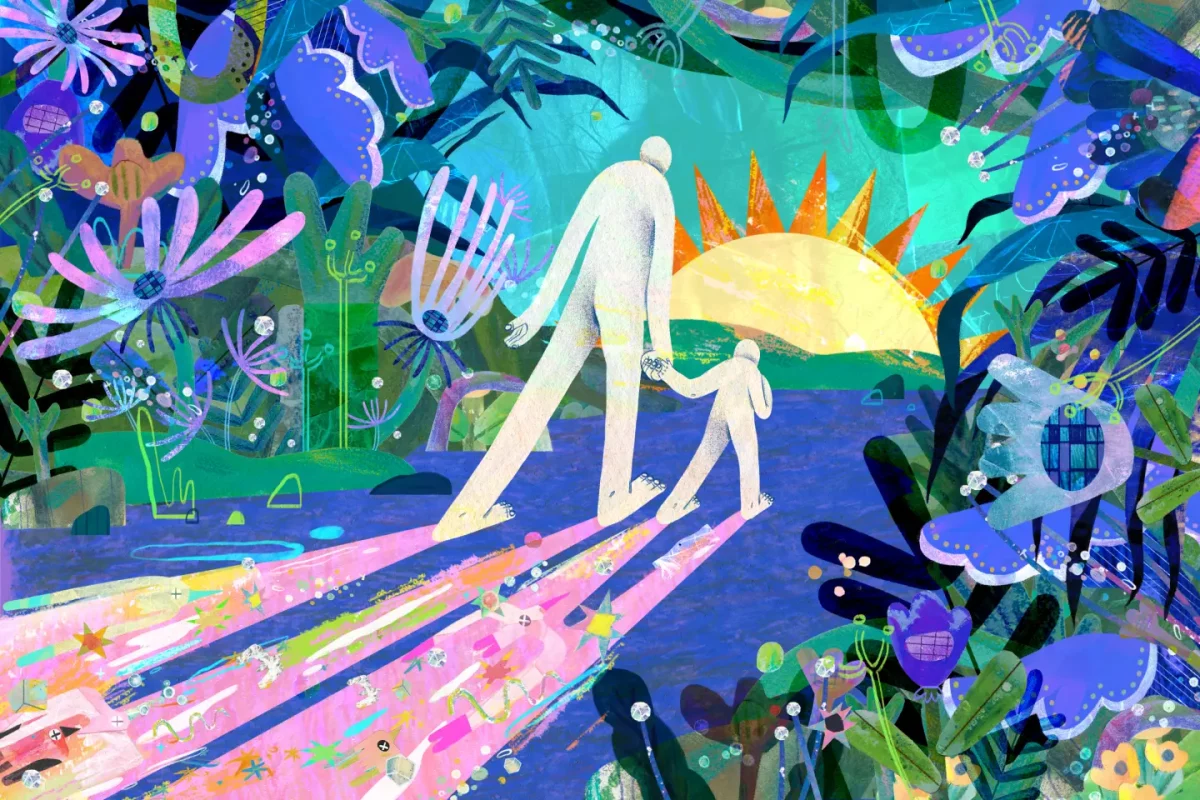
Have we ever really seen a happy smile plastered upon an adult’s face? A gentle, peaceful, joyful look in the eyes, bright smiles overflowing with happiness. And, if we’re being honest, isn’t this smile more common in children? The answer may be obvious. This might make one start thinking: Why is this? Why are children more interested in life than adults? Is it easier to be happy when we are younger? To answer this question, we’ll do some research and look for possible clues. How do we view the diminishing ability of children to experience happiness as they grow up to become adults?
Childlike imagination is uncontainable; it cannot be restrained. As younger children’s curiosity wanders and grows, adults capture it and hide it away. It raises the question, why should that occur? Is it the classic 9-to-5 work environment? Or the social standards that have been built around the online media? For generations upon generations, there has been an undeniable trend, almost always noticed yet never directly addressed, at least not properly. As a young toddler grows into a child, then a teenager, and later into adulthood, it is increasingly apparent that their minds have changed. Not just develop normally, but also duller and less creative.
One of the many reasons for this phenomenon is our educational system. Schools help develop a child’s academic capabilities, including information processing and comprehension skills. But an aspect that isn’t often taught to them is the ability to foster their imagination. As more time is devoted to their academic work, students have less time to let their creativity take over.
Another, less popular belief builds on the previous cause: the body’s natural response to unpleasant changes around it—stress. An excessive amount of this reaction would leave a negative impact on one’s not only physical but also mental and emotional health. For adults, stress, anxiety, depression–these mental illnesses are common, yet not in children. One factor in this could be self-awareness. Self-awareness is usually overlooked, making socialising easier. Science has proven that being with your loved ones or those you care about can help your mind and body relax. As you age, that sense grows stronger, leading to self-doubt about your actions and loneliness.
After graduation, the ceremony marking the transition from childhood to adulthood, people often stay to search for jobs or enroll in college to further their education. Eventually, no matter which path is taken, these people find jobs and start working. Stress continues in almost every aspect of their daily lives: pressure from family, over-demanding work schedules, social situations, and a mountain of people and things to worry about.
With so much on their hearts, adults have to find a way to balance things through. Even with the constant weight on their shoulders, they continue doing what society has planned for them. “Research suggests working more than 55 hours a week can have negative effects on your health — and it’s no wonder. When we sacrifice our health and personal responsibilities for overworking, we give up more than just our time and energy. Our relationships can become strained, our mental health can falter, and our bodies can become overwhelmed with stress.
Psychologist Adam Borland, PsyD, talks about the warning signs of overworking and why it takes such a toll on your body.”
Throughout this process, they learn to fit into the normalcy of expectations and not stand out, essentially becoming more “boring.” For others, it’s simply because the pressure of reality slowly sinking in is wearing them out, leaving them too tired or too scared to show their childlike behavior.
One thing adults are good at, but children aren’t, is packing their schedules. If we imagine our lives, the time we spend in it as a box, the majority of adults would divide the space into multiple categories and label each until everything is full–friends, family, work, chores, relationships, budget, responsibilities, etc., leaving no room for wonder. For children, who do not carry as much responsibility, fill that space up with wonder.
When kids are young, they are filled with curiosity and enthusiasm for the world, because they do not know what is around them. It is human nature to desire knowledge about one’s surroundings; awareness is an essential element of the human mind. If we know everything, what else can we hope to learn? The death of our wonder in a human is inevitable; we can only hope to preserve it as long as we can.
What kids and adults see as right and wrong, fun or boring, can be opposites. They either overlap or are overlooked, and another natural human tendency is to be right; they try to change how the other individual sees.
Children’s perspectives come in all shapes and sizes; adults are so similar. As people grow up, their views start to align with the public’s rather than keeping their own unique beliefs.
Children are the future of society. We should encourage and protect their imagination, curiosity abd enthusiasm for creation. Otherwise, their curiosity will be stifled, and critical thinking, a valuable tool even in academic learning, will become more difficult, ultimately slowing their understanding of this important subject. Societal and family expectations for children gradually erode their simple, happy hearts as they grow up, and they begin to pursue more purposeful goals, which diminishes their excitement and hope for life. All this evidence shows how we, as children, are shaped into adults. They are burdened with the heavy responsibilities and pressures on their shoulders, forced to give up their nature, transform from natural people to social people, act and think in a certain way, expected by others, and become more adapted to reality–compared with their youth when everything is resected, and there is no pressure, they will become more boring. To change this result, the better approach might be to follow children’s nature, discover what interests them, let them be “themselves”, and maintain their personality independence and free will, rather than trying to become what you want them to be.