
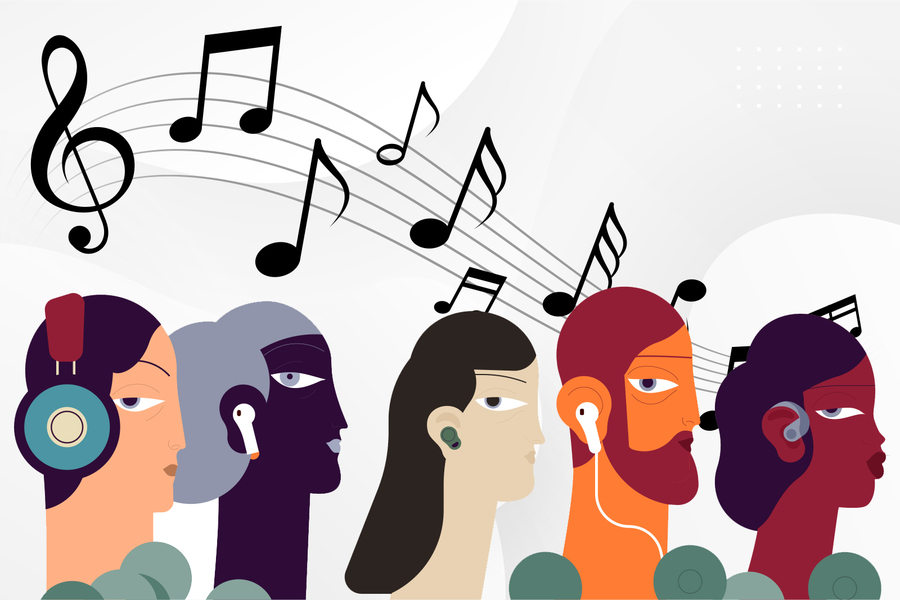
Studies have shown that Teenagers now listen to music significantly more than any other age group. About 82% of teenagers listen to music daily, raising the question of how it affects them. This can be emotional and mental, as well as physical. It is said that most teenagers use music to relate to situations they are dealing with, which can be beautiful. Still, often relatable music can worsen a negative headspace.
Music Working With Education
 From an educational standpoint, it’s been proven that music can help organize thinking. It can stimulate brain regions involved in math, language, and complex thinking. Many teenagers have claimed that it’s not just lyrical music that has improved their thinking skills, but instrumental music as well. Classical music can be extremely stimulating to the brain and help with focus and concentration. Listening to Jazz music has also been shown to reduce stress and help students focus better. Stressful thinking can often harm a person’s ability to focus and stay on task. Keeping your mind on track is a skill many teenagers struggle with, not yet fully knowing how to compartmentalize their thoughts, so music can be a great way to help with that.
Mood Enhancement?
Regarding the mood-enhancing effects of music, it has been shown that it can release dopamine, a neurotransmitter in the brain. Dopamine increases pleasure and improves mood and is part of the brain’s reward system. Many say that fast-paced music or tempo creates a sense of motivation in a person. It can make people want to be productive. Classical music can also be proven to stimulate certain parts of the brain that battle ADHD. This can calm people who have trouble focusing and create a peaceful environment. Obviously, listening to fast-paced music with affirming lyrics will leave someone in a great mood, but what would happen if someone listened to the exact opposite? How could it affect someone’s mood and maybe even their lifestyle?
Emotional Risks
 Sad music can sometimes have a stronger emotional pull than people realize. While it may feel comforting to hear lyrics that reflect personal struggles, constantly listening to downhearted songs can make negative feelings even stronger. Teenagers, in particular, can find themselves replaying thoughts of hopelessness as the music reinforces those emotions. Over time, this can make it harder to step out of a negative headspace, and relying on sad music as a coping mechanism might prevent someone from finding healthier ways to manage stressor improve their mood.
The Physical Aspect
Beyond the mind, music can have a big impact on the body. Listening to music can change your heart rate and blood pressure. There are even studies proven that prove it can affect your breathing patterns depending on the tempo and rhythm. Fast-paced music can make your heart beat a bit faster and give you a boost of energy, which is why people tend to listen to music while exercising. On the other hand, calmer music can help relax the muscles and reduce tension, making it easier to unwind. Sleep quality can also be improved with calmer, more relaxed music, which can help the body regulate more easily.
Music has a strong impact on our society and the teenagers who live in it, affecting their emotions, thinking, and daily lives. It can boost mood, focus, and motivation, but too much sad music can deepen negative feelings. Being mindful of what we listen to helps us enjoy music’s benefits while avoiding its potential downsides.