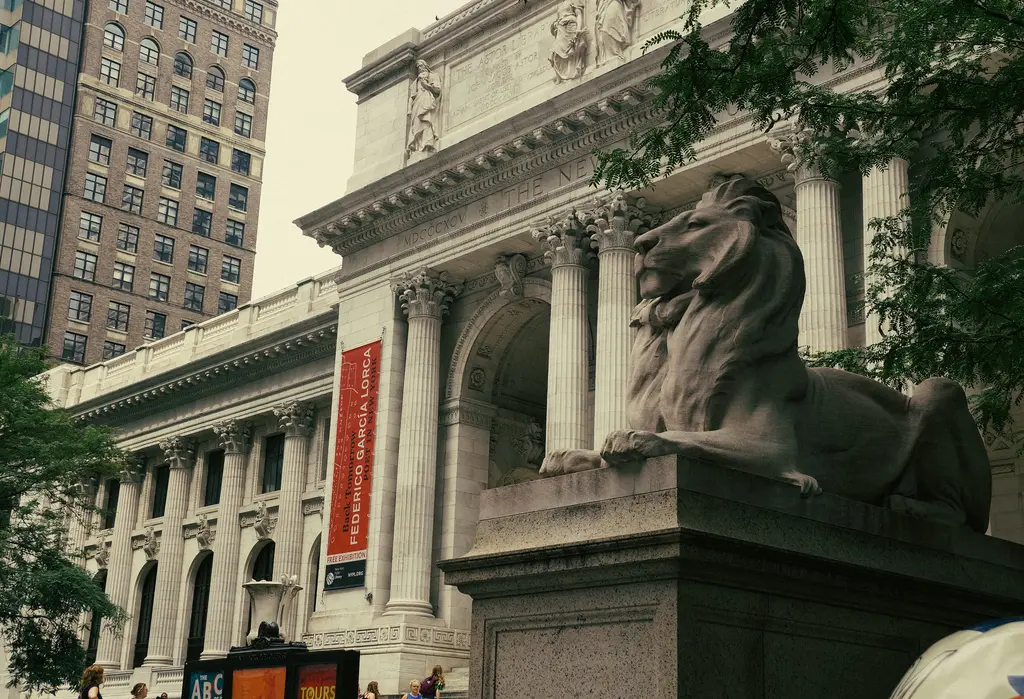
Libraries remain on the edge of our minds as a constant, stable presence. They’ve always been there and, as far as we’re concerned, will continue to be on standby well into the future. They’re untouchable archives of information and entertainment, filled to the brim with an ever-growing collection of stories and records that can never be contained in a single person. And yet, their seemingly immovable presence in our society is being tested. Technology, AI, and Google have all helped diminish the value of these once-magical community spaces. Now more than ever, people have stopped reading and even grown lax about thinking for themselves with such easy access to processed information, and the results don’t paint a good picture. It manifests in fewer visitors, cut funding, and a devastating downfall of critical thinking.
 Our libraries are 90% funded by the government, allowing them to remain free and accessible to all. The importance of free information should never be underestimated, either. Which is why the money being swept out of it raises such concern. In New York last year, public libraries faced a nearly $60 million budget cut. Meanwhile, this year, the current administration has decided to eliminate IMLS, a federal agency that funds thousands of libraries and museums across the United States. It goes without saying that a loss like that would be detrimental to the literacy and education of citizens across the country. This funding trickles into other government facilities, and this January, with over $85 billion dollars, ICE became the most heavily funded law enforcement agency in the USA.
Naturally, it’s easy to see which program does better work with the budget at its disposal. Not only do libraries produce a wide range of dictionaries, fiction, and history, but they also do it in an unbiased manner. No filters and no propaganda are prowling the shelves, only alphabetical order, a notion that grows more valuable as social media and even search engines fall victim to our unconscious human biases. And beyond the obvious book services, libraries provide a calm space for studying, for clubs, for waiting to be picked up after school, or even just for getting out of the rain. As high school sophomore Chimerie Monday puts it, “They’re a great place to gain literacy for free.”
Books themselves bring to the table sides that e-books and online stories could never hope to match. There’s really, literally nothing like flipping through a magazine or a classic play and getting the tactile experience. Physical books have been shown to provide over six times more comprehension than digital readers. While accessing information on the internet is undoubtedly easy and helpful, it can detract from the understanding you could gain by reading the same information on paper. Not to mention the effect it has on our attention spans, which grows worse with every short snippet and video we scroll through.
It goes to show that even though libraries feel like a constant we don’t need to nurture, they’re more at risk than you think, and it’s in your power to save them. Through more frequent visits and interactions, our local libraries can regain stability and provide countless benefits, such as a focused setting for students and a haven for all. Nothing bad can come from a free, accessible hub of entertainment, information, and brain stimulation. Most don’t appreciate what they have until it’s gone, but we can make sure libraries never go in the first place.