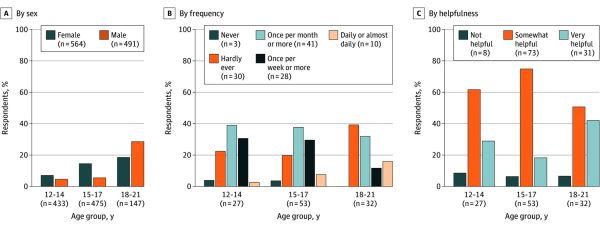
One of the most popular use cases for Artificial Intelligence (AI) last year was psychotherapy, which has been steadily increasing, as very few who truly need therapy actually get it. We should educate students and children to stop seeking emotional support from AI.
In one case, a user received a love confession from the AI search engine Bing. In other cases, AI has been shown to sexually harass minors and spread disinformation. Furthermore, there is a major concern about privacy. Psychologists are required to keep everything confidential. However, AI can share information with its providers. Aside from the preventable sharing of information, hacking is also a prominent security risk. Information can be leaked. “We have hundreds of millions of people interacting with AI chatbots, which are collecting personal data for training, and almost no research has been conducted to examine the privacy practices for these emerging tools,” says Jennifer King in a Stanford Report published on October 15th, 2025, questioning AI’s security and privacy. It is important to opt out of training LLMs (Large Language Models) on your conversations to prevent data leaks and the exposure of personal information.
On the other hand, a 2025 study found that 56% of psychologists used AI to assist them in their work at least once, yet many believe AI will not replace their careers. Additionally, AI can handle simpler tasks such as note-taking, summarizing sessions, and more. This reduces time spent on repetitive tasks, giving psychologists more time to focus on the patient.
AI can also “help people who may shy away from a human therapist”, such as those with social anxiety, to interact with an LLM to help with mental health problems that are not as serious, like sleep and stress, says Jessica Jackson, PhD, in an article in the American Psychological Association.
 Beyond having to reach out and access help manually, “in psychology, various apps have emerged and already play a role in mental health care for millions.” Certain apps help patients connect to psychologists worldwide, quickly and easily.
However, AI does not express ethics, feelings, or empathy. It cannot feel what others are feeling and therefore lacks the humanity, contact, and understanding of a human psychologist. A language model cannot live up to a real psychologist because they need a license, which ensures they are well-educated and eligible to treat those with mental illnesses. There have been many reports of chatbots putting delusions into people. Multiple teenagers have passed away due to self-harm through relationships with the chatbots, according to Teachers College, Columbia University. Also, “more than 61 million Americans are dealing with mental illness, but the need outstrips the supply of providers by 320 to 1”. This shows that there are an absurd number of people who desperately need help and turn to AI, thinking it is their friend, when in reality, they are talking to a machine that is trying to predict their next words.
To prevent people from using AI for emotional support, students should be taught that AI can lead them down the wrong path and that developers bear no liability, since responsibility will fall on developers, who are not specifically trained to handle mental health care issues.