
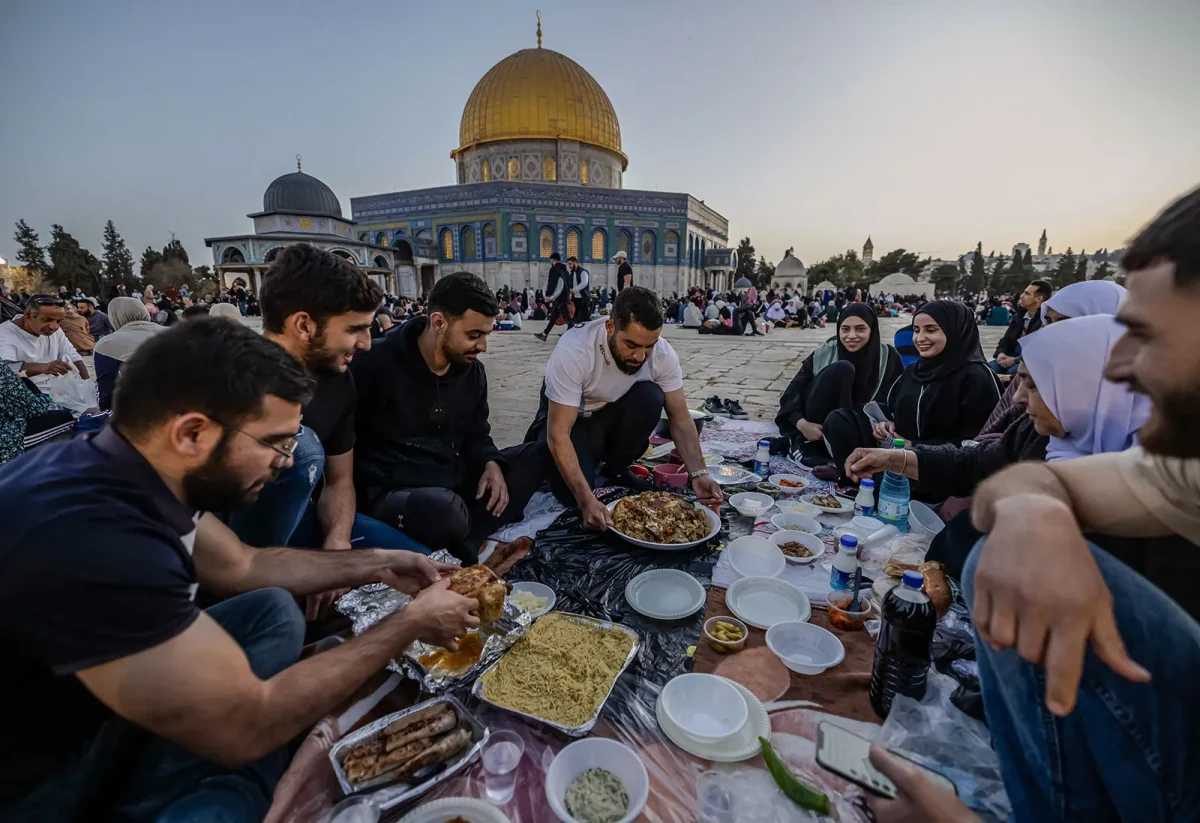
As the holy month of Ramadan begins this year, Muslim students at Santiago High School are preparing for a month of fasting and contemplation. However, just like the holy month of Ramadan, it carries several misconceptions. Misconceptions and stereotypes regarding the holy month of Ramadan can spread very quickly, particularly through social media. Therefore, students of our school must understand the actual meaning of the holy month of Ramadan.
Ramadan is the ninth month of the Islamic calendar. This holy month of Ramadan is considered to be the holiest month of the Islamic calendar. During this month of Ramadan, Muslims fast between dawn and sunset. This implies that during Ramadan, Muslims refrain from consuming any type of food or water. After the sun sets, Muslims consume a meal during iftar. Muslims also increase their prayers during this time and focus on self-control, gratitude, and helping others. Ramadan fasting is not about fasting from food. Instead, it is about developing good character, controlling one’s temper, being generous, and improving one’s relationship with God.
Another common myth about Muslim students is that they are “starving” and “unhealthy” during Ramadan. However, Muslims observe fasting in a healthy way. They take a meal before dawn, known as “suhoor,” and another meal after sundown. In some cases, students even go to school, finish their homework, and play sports during this time. Although fasting for school hours might not be easy for students, they still manage to cope with the long school hours.
This leads to insensitive remarks, such as “Why don’t you eat?” or “You can’t even drink water?” This, in a way, creates discomfort among fasting students, especially if the question is asked offensively. It is always better for the students to ask questions politely and try to open their minds to new ideas. It is always better for students to learn about different cultures and religions, which can create a more inclusive environment at school. Ramadan is also a time when Muslims display their community spirit and kindness. For example, during this period, Muslims gather and perform their night prayer together. In addition, they also share their meals during this period. Charity is also encouraged during this period. Muslims are encouraged to show kindness to those who need it.
It is also encouraged for Muslims to be thankful for the blessings they have received. This is a value that we can all relate to at our whole school. Due to the diversity at Santiago High School, we need to be aware of and appreciate one another’s traditions. The dissemination of misinformation creates a gap between people, while the dissemination of information creates a bridge between people. As a student-produced newspaper, we at The Shark Attack have a responsibility to bring awareness about issues affecting our school. Ramadan is an issue affecting many students at our school.
However, the reality of misinformation’s effects cannot be denied. It can affect how a student feels in a class, on a sports team, or in a social group. For example, something as simple as understanding the reason why a student is not eating their lunch is a significant factor. The school staff can assist the fasting student by understanding the level of energy they may experience during the school day. Despite everything, Ramadan is not about weaknesses; it is about strengths. It is about self-control, thanks, and compassion. By taking the time to learn about the true meaning of Ramadan, we are showing respect to our classmates and creating a more unified school. As Ramadan continues this year, my call to action is this: take a moment to learn before you judge. Ask questions; do not spread stereotypes; be there for one another. By doing so, we can create a school where everyone at Santiago High School is seen, respected, and valued.