
Many students at Santiago High School come from various backgrounds and ancestries. These individual histories lead to differences in preferences, nostalgia, and, more importantly, foods. During the holiday seasons, it is essential to engage with cultures distinct from one’s own. This SHS cookbook is a compilation of foods from around the world that students at Santiago have mentioned enjoying during the holidays. This list of meals symbolizes unity and emotions that one can only experience through food.
Divine Drinks
Beverages can define an entire event. If the drink you receive is warm and sweet, the atmosphere can be perceived as inviting and cheerful. Meanwhile, if your drink is cold and fizzy, the environment can seem sociable and lively.
Several SHS students discuss their favorite beverages and explain their significance to their culture or why they enjoy them. The more popular drinks include: Cider, Atole, and Eggnog.
-Cider is enjoyed for its apple flavor and its association with New Year’s Eve.
-Atole is valued for its cultural significance and the warmth it provides.
-Eggnog is liked for its odd recipe and the collaboration of making it from scratch.
Cider is a juice typically made from raw apples and sweeteners, sometimes fashioned into an alcoholic beverage by adding yeast and carbonation. Although this drink is extremely popular in North America, it originated in Britain and was first referenced by the Roman Empire. The Romans enjoyed this drink so much that they brought the recipe back home in 55 BC. 
So, how did Cider become acknowledged as a winter drink? Typically, smaller fruits such as grapes and berries were preferred for juices and ales, but in harsh winter climates, these fruits could not withstand the temperatures. Apples overcame this flaw and proved to be a hardier fruit, increasing their reputation.
Atole is a traditional drink originating from Mexico and Central America. This beverage is a warm, creamy drink with flavors of cinnamon, vanilla, and chocolate. The first versions of this drink were made from corn, cocoa, chia seeds, and amaranth.
 Because sugar was not yet discovered 10,000 years ago, ‘piloncillo’ was used in its place. Piloncillo is a brown sugar made from melted sugarcane with a caramel-like taste.
The word ‘atole’ stems from the language Nahuatl, which means ‘watery’. Various versions of this traditional drink were created for different purposes, from health benefits to lactation, and some were developed simply for different flavor preferences.
The main attraction of atole is the warmth and nostalgia it provides during harsh winters.
Eggnog is a sweet custard-like drink made from milk, cream, eggs, and sugar. This base is then spiced with nutmeg and cinnamon. While most people stop there, some adults add a spirit, typically rum or bourbon. 
The origins of this drink come from medieval Britain, but it was initially called ‘posset’. Although eggnog was created in the 13th century, it was not associated with the holidays until the 18th century. The 1700s were when the American colonies emerged, and there was a plentiful supply of milk, eggs, sugar, and cheap rum.
Although eggnog is considered a North American or British beverage, several countries, including Puerto Rico, Mexico, Poland, and Germany, also enjoy it.
Alluring Appetizers
Appetizers are usually dismissed as a light snack handed out before the ‘real meal’. While this can be true, sometimes they can mean much more than that. These appetizers have a long history and require considerable care and collaboration to create. Stuffed mushrooms, Pozole, Deviled Eggs, and the Sausage Roll were all dishes recommended by Santiago Students to share their culture and preferences.
Stuffed Mushrooms are prepared by removing the caps of mushrooms and filling them with a variety of ingredients, such as herbs, cheese, breadcrumbs, meat, or vegetables—anything one could desire.
The original recipe for these filled fungi originates in Italy, where they were initially stuffed with parsley, garlic, breadcrumbs, and Parmesan cheese. This dish was developed in response to the abundance of mushrooms in the late 19th century.
This dish exemplifies the resourcefulness of the Italian people in turning an otherwise inedible mushroom into a decadent snack.
Pozole is a traditional Mexican soup made with pork, garlic, hominy, and chiles. Historically, this dish was  reserved for the elite of the Aztec Empire, whereas today it is available in most grocery stores. Pozole has not only a cultural background but a spiritual one.
The Aztecs used to offer this dish alongside an abundance of corn to rain gods and deities, specifically Tláloc. They made such offerings in hopes of plentiful rain and bountiful harvests for the spring season.
This dish represents the Aztecs’ faith and commitment in their offerings to the gods.
Deviled Eggs are halved hard-boiled eggs, with their yolks whipped and seasoned with various spices and condiments. This mixture is then piped back into the egg white, often topped with chives or dill. The origins of this appetizer date to Ancient Rome, where it was served as it is today: seasoned, spiced, and served before an entree. 
Although this dish was developed around 600 BC, it became increasingly popular over the subsequent centuries.
In the 13th century, deviled eggs were most popular in Spain and were fashioned with cilantro, pepper, coriander, and onion juice, then beaten with murri.
In the 15th century, they became better known in Europe and were often served as sweet treats, topped with raisins, mint, and powdered sugar, rather than as savory eggs.
This dish represents unity, bringing together not only people from around the globe but also those from completely separate time periods.
A Sausage Roll is a seasoned pork sausage wrapped in a flaky, puffed pastry, then baked until golden brown. It  is commonly assumed that this classic dish originated in the United Kingdom. Still, it derives from Ancient Greece, where it was initially made with sliced meats baked in dough.
After Greece, the French came to Europe in the 1800s. Britain took one look at this sausage roll and claimed it as their own, selling out all across London streets in the Victorian era.
This dish represents reinvention. From Greece to France to Britain, this meaty roll has been redesigned and reintroduced to many communities and homes.
Enticing Entrees
Entrees are usually the highlight of a meal, and deserve it so. These entrees originate from places of love and innovation, crafted to feed families sustainably over long periods. Christmas ham, Tamales, Lasagna, and Christmas goose were all dishes provided by Santiago students. These entrées collectively symbolize the capacity to overcome hardships and transform limitations into opportunities.
Christmas Ham is a main course for many holiday dinners. It is an oval-shaped hunk of pork taken from the hind legs of a pig. The ham is often smoked, then glazed in a sweet sauce. 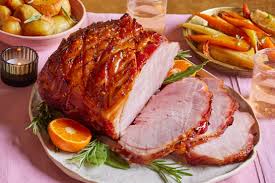
This dish draws from Nordic and Germanic pagan traditions. Their original version of the current Christmas ham was prepared from wild boar to honor the god Freyr and was then served during Yuletide festivities.
When the 20th century began, pork soon replaced boar and became a cheap alternative to turkey and steak during the holiday seasons in America.
This dish represents resilience, having endured solstice traditions and remaining an essential part of Christmas meals.
Tamales are a classic Mesoamerican meal made from a corn dough called masa. Filled with cheeses and meats, then wrapped in a corn husk and steamed until cooked. 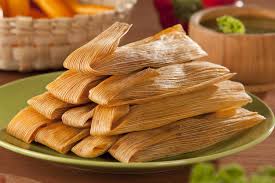
Surprisingly, tamales can be traced back to 8,000 BC, making them among the oldest foods still eaten today. Beyond being among the oldest foods known, it’s also among the most diverse, with over 500 variations.
This dish represents tradition, with its basic recipe passed down from generation to generation, creating a timeless dish enjoyed by all.
Lasagna is a hearty dish consisting of layer after layer of waved pasta sheets, tomato and meat sauce, and a variety of creamy cheeses, all baked into a pan until golden. 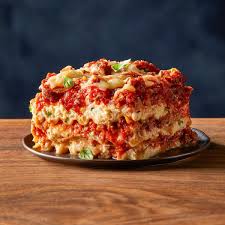
This dish’s origins are muddled and debated among food experts. The prevailing view is that, although technically an Italian original, lasagna should still be recognized as inspired by the Greeks.
The Romans adopted elements of Greek culture after overthrowing the Greek kingdom, incorporating many Greek words and foods. Although the Greeks originated the concept of lasagna, Italy first transformed it into a warm dish, filling it with hearty ingredients.
This dish represents depth, from its origins to the literal depth of the layers involved in a lasagna. This entrée demonstrates that one good thing can inspire another, creating a heartwarming meal.
The Christmas Goose is a festive food made from the dark, fatty meat of geese, often roasted alongside fruits and herbs. 
The reason geese became a popular holiday entrée is that they are associated with autumn and winter. When hunters went out looking for turkey or chicken, they often stumbled upon geese and hunted them as well.
Currently, these large birds are raised like chickens and ducks for their byproducts.
This dish represents opportunities. When such opportunities arise, it is essential to take advantage of them and provide food for the family.
Delicious Desserts
The best is always saved for last, and these desserts are known for being the cream of the crop at SHS. Most view desserts as just a sweet treat to enjoy after a hearty meal, but they can mean so much more than that. Apple Pie, Rosca de Reyes, Gingerbread Cookies, and Rice Pudding are examples of popular desserts that have deeper meanings than one might assume.
Apple Pie is a flaky pastry crust filled with spiced apples, served with a side of iced or whipped cream.
When one thinks of an ‘American dessert’, most people think of an Apple pie. Although apple pie is highly popular in the United States, it originated in several European countries. The apples themselves weren’t even from America, but were instead brought over by settlers. These apple trees were also used to stake out land claims, creating vast orchards to demarcate property lines.
This dessert not only tastes good but also serves a purpose: storage. In 14th-century England, people baked their plentiful apples into pies to preserve them, given the lack of refrigeration.
This dish represents patriotism. Although apple pies aren’t from here, they’re still beloved and symbolic to America, similar to the people who inhabit the country.
Rosca De Reyes is an oval-shaped bread with candied citrus flavoring and a little surprise inside. This dessert hails from Mexico and many Spanish-speaking countries. This dessert is unlike any other; it has its own little secret.
Surrounding the holiday of Three Kings’ Day, celebrated on the 6th of January, this dish is baked and stuffed with a small figurine of a baby Jesus to mark the arrival of the three wise men at Jesus’ birth. The finder of the baby figurine has to host a tamale party on February 2nd to celebrate Día de la Candelaria, or Candlemas Day.
This dish represents community. Bringing together friends and family to bond over this bread and celebrate a holiday known for bringing people together.
Gingerbread cookies are typically made from flour, sugar, molasses, butter, ginger, cinnamon, and cloves. These ingredients, when combined, produce cookies that date back to 1500 BC in Ancient Egypt. Although their version of ‘gingerbread cookies’ is more like honeycakes, these cakes are still considered the earliest such treats.
In the 14th century, these cookies skyrocketed in popularity, traveling across Europe from Germany to France, to Belgium, and to England. Germany popularized these long-lasting treats to the public through the fairy tale ‘Hansel and Gretel’ and churches that sculpted these cookies to represent religious figures. These ‘gingerbread men’ allowed people living in poverty in the 14th century not only to obtain information about religious figures but also to receive free food from churches.
This dish represents home. Such cookies foster a sense of belonging among individuals experiencing homelessness. These cookies provided a slight feeling of education and warmth, even when unexpected.
Rice Pudding is a nostalgic dessert made from warm rice, milk, sugar, and cinnamon. Reminiscent of oatmeal, this dessert is creamy yet thick when appropriately prepared. Rice pudding varieties originate from around the world, including England, Spain, India, Sweden, China, Mexico, Africa, and the Middle East.
This decadent dessert is the connector of all desserts. Tracing back to most cultures, regardless of the hierarchy of the dish. In some countries, this dessert was reserved for the wealthy, who had to import rice at a high cost. While in others, it was meant to warm the bellies of the poor, providing a quick, thicker meal to fill the stomach for harsher winter nights.
This dish represents fellowship, bringing together communities from across the globe with a single dessert. This detailed list of festive foods reflects the cultural and ethnic diversity represented at Santiago High School. Each of these foods is a result of unity and appreciation for the traditions and customs of other backgrounds, distinct from our own.