
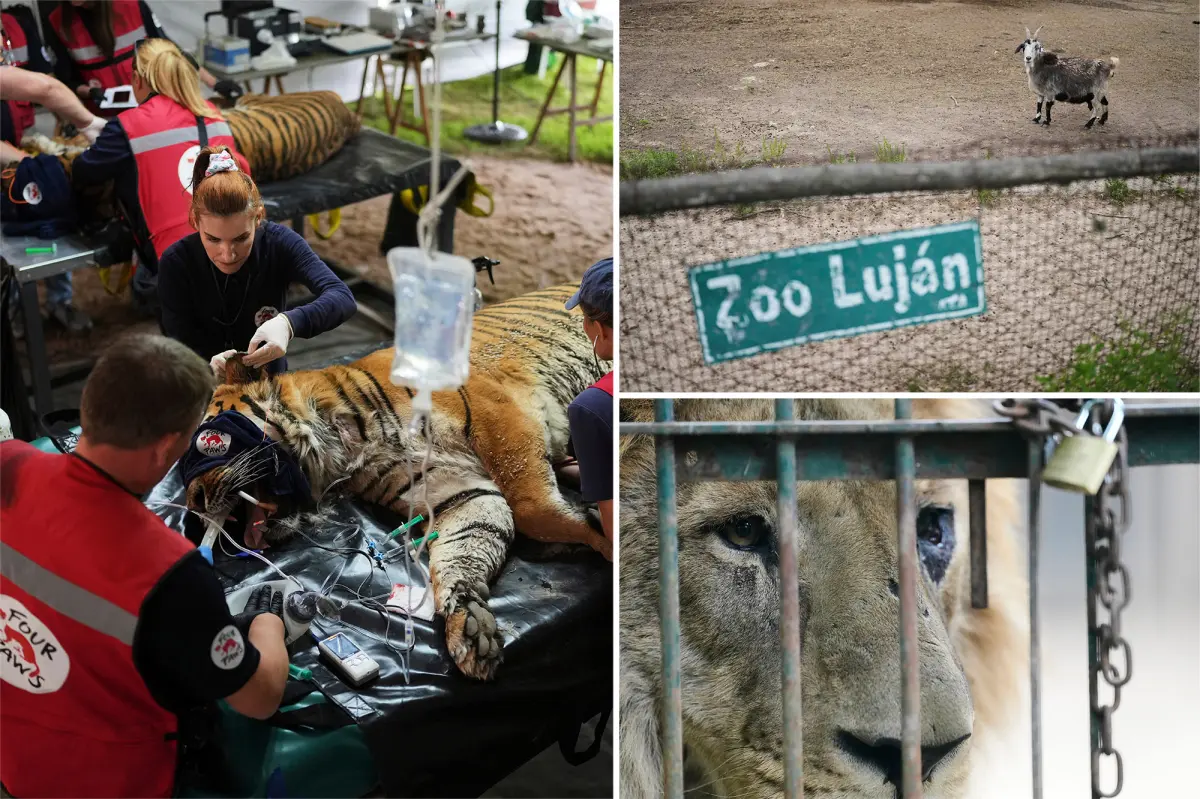
Seven female lions crammed into a cage the size of a small bedroom. This was the horrific reality discovered at Argentina’s abandoned Lujan Zoo. In September 2025, dozens of abandoned animals were saved from a closed down zoo called Lujan Zoo, in Argentina. To be specific, more than 60 lions, tigers, and two brown bears. This zoo was on the outskirts of Buenos Aires, Argentina. It was called Lujan Zoo. These animals were stranded for years. This zoo was closed in 2020 due to serious safety and welfare concerns. This was a zoo that allowed people very close interaction with lions and tigers. Recently, the animals left behind after it closed were saved.

Four Paws, an international animal rescue organization, launched one of the largest animal rescue missions in history. This is one of the largest veterinary and extraction missions in history. In September 2025, Four Paws assumed full legal responsibility for the surviving animals at the zoo. This rescue mission is part of a Memorandum of Understanding signed in July 2025 between Four Paws and the Argentine government. The animals were discovered in severe neglect, which prompted an urgent, full-scale intervention. There are currently 62 big cats alive and two bears. In 2020, there were over 200 big cats and nearly half of them have died since the zoo shut down. Veterinarians found animals in overcrowded and tiny enclosures. They found seven female lions in one 3-square-meter cage. They also found Asian tigers housed with African lions, which is a very unnatural mix. Many of the animals they saw were never vaccinated or sterilized. Some suffer open wounds, infections, malnutrition, and overgrown claws. Some of the animals even had root canals from chewing metal bars.
Four Paws has teams that are providing emergency medical care, IV fluids, and antibiotics. They are also sedating animals for safe treatment. They are also beginning preparation for relocation to foreign sanctuaries.

The animals were abandoned when the zoo closed in 2020. The animals remained behind without a management plan in place. A few unpaid former zookeepers stayed voluntarily to feed the animals. A lot of the animals died from illness, fighting, stress, and infections. The Lujan Zoo was famous for allowing tourists to pose with lions and tigers. It was also criticized for unethical practices. The government ultimately shut it down for safety violations. This rescue could push Argentina toward major animal welfare reforms. This includes tighter regulation, a ban on private exotic animal ownership, stronger standards for captive wildlife care, and a potential regional leadership role in Latin America. This mission could set a global precedent for dealing with abandoned exotic animals after zoo closures.
As for what comes next for the animals, many will be relocated to sanctuaries abroad once they are medically stable. Some may remain in Argentina under new regulatory frameworks. Long-term rehabilitation will be slow due to years of neglect. There are a few remaining challenges, such as transportation logistics, finding sanctuaries with enough capacity, securing funding for long-term care, and ensuring legislative reforms actually pass.
Four Paws really must care for the animals to do this. They are doing an excellent and humane thing by saving these animals. They are doing everything in their power to protect these animals and keep them safe.