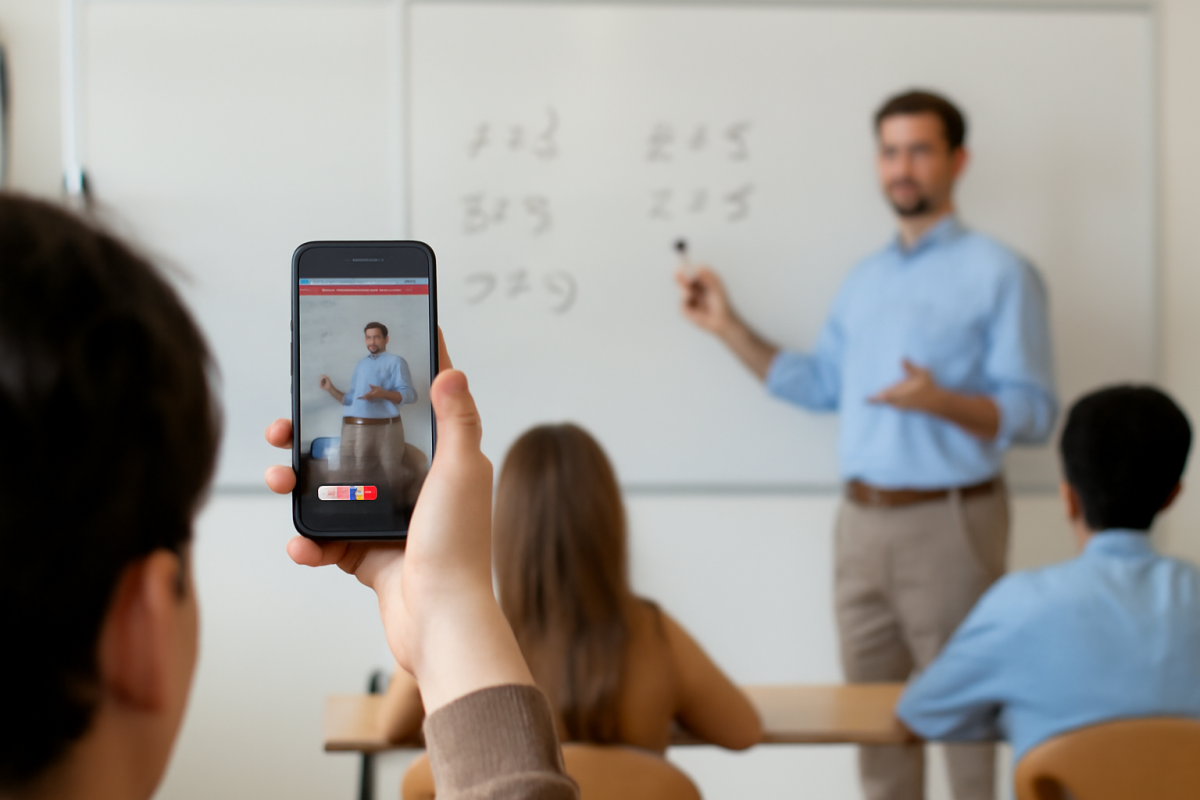
Excessive electronic use is an issue that almost everyone struggles with in 2025, as technology and social media continue to grow more advanced and entertaining with each passing moment. There is no doubt that these irresistible distractions have led to numerous negative outcomes, not only in adults but mainly in teenagers. And because teenagers have become heavily tempted to use their devices while in school, it has finally come to a point where laws are being enforced, directly targeting students, in an attempt to put an end to this.
 On September 23, 2024, students were introduced to the Phone-Free Schools Act, a policy that had been in development since 2019 and was set to be fully implemented on July 1, 2026. Our governor, Gavin Newsom, wanted school districts across California to eliminate excessive phone use by students on campus. His main intentions were to address mental health issues in students related to high screen times that easily harm students’ productivity and academic success. Many teachers and parents support this law as they believe it not only grants students better focus in their classes, but it also allows for reduced cyber-bullying and overall anxiety caused by excessive social media use. But what are the risks that come with restricting phone use for teenagers while they’re in school all day?
While the policy produces some great benefits for students protected from overexposure to social media, a multitude of parents have opposing opinions on the matter, as they feel that this phone law is a dangerous restriction that limits teenagers’ access to communication in times of emergency. Many students, like myself, share similar opinions, as do many students I observe, who express their discomfort in various ways with giving up their phones to be in their teachers’ possession. This lack of trust between students and teachers is merely natural, as most people wouldn’t want to give such a valuable belonging to an adult who isn’t their parent.
 However, a phone collecting tactic that may help teachers maintain a stronger bond of trust between their students, is one that one of my previous teachers had used in the past that I really liked, where she would collect everyone’s phones at the beginning of class, and have everyone retrieve their phones during short breaks in class, or after they had completed all of their assignments for the day. This method motivated me to complete more of my work, and I can guarantee that other students felt the same way. Academic validation is something that most teenagers strive for, and surely they get more motivation to complete their work if they know that they will be “rewarded” with their phones afterwards, rather than having to retrieve them at the very end of each class period.

However, many school districts have already been enforcing it. What school districts and most teachers don’t realize is that this law can be detrimental to students, as phone restrictions themselves can become a larger distraction, causing students to spend the majority of class time wanting their phones back rather than completing their assignments. Additionally, students who refrain from using their phones throughout the school day may become more dependent on them once school is over, potentially leading to further issues such as increased screen time that can interfere with their after-school activities and overall social life. For students who are too busy and unable to access their phones until after their post-school activities, such as sports and club events, they are more likely to fall into excessive phone use later in the evening, which can creep into their nighttime routines and begin to disrupt their 8 hours of recommended sleep.
Finally, there are various ways for teachers at Santiago to efficiently navigate the Phone-Free-School Act policy, without negatively impacting the lives of their students, and maintain class lessons with limited distractions, all while still complying with the law.